
A future we can’t predict
We’re all a little on edge and wish we could unsubscribe from 2026

We greeted the first full week of 2026 by returning to bright and sunny Colorado. I absorbed some vitamin D and felt great, despite a constant, throbbing pain from my frostbitten toe and inability to run due to the injury. My brush with the deadly cold left me full of gratitude, overjoyed to be alive. Not just alive, but warm and alive! What wonder!
But I quickly slipped back into the churn of my routine, barely coming up for air as I moved through the mindless drone of rowing machines and grocery store aisles before transitioning to the surreal terrors of the news cycle. I was overcome with panicked thoughts: “We need to leave tomorrow.” Followed by swift collapse into lukewarm disquietude: “There’s probably no way things aren’t going to continue to get a whole lot more difficult. We can hide ourselves away in the French Alps, but this is coming for us all.”
It is a strange place to be — a place of privilege, making plans for the future that I am unequivocally excited about, while acknowledging, with equal certainty, that — should I live through it — the second half of my life is going to be a lot more volatile than the first. My friends in Juneau are evacuating their homes due to extreme avalanche danger. My friends in California are digging out from mudslides and flooding. I’m throwing away all of the food in my freezer due to prolonged power outages as the red-flag fire danger rolls into another wind-blasted, 60-degree January day. And, of course, there’s the whole spectre of world war as our federal government simultaneously declares war on its own citizens. I really, really, miss 1989, when we watched the Berlin Wall fall and the ozone layer start to heal, and let ourselves believe that everything might be okay forevermore. I suppose what I miss is the naivety of being 10 years old.
And maybe that’s the way it’s always been. As we age, our blinders begin to fade, and we see the world more clearly. Some people choose to look away, to retreat further into routine as an act of self-care. “Don’t read the news,” they’ll admonish. “It will just upset you.” I’ve lived with myself too long to believe it’s possible to look away. So the question is — how do I live my values and pursue a meaningful life in an uncertain future that may become fleeing from a wildfire, or it may become an old lady swinging my handbag at Neo Nazis and probably being shot for that, or it may become hiking in the mountains and breathing out gratitude for every inhalation I’m able to make.
I keep going back to the identity I’ve always held, as far back as my memory goes. One of my earliest memories is sitting in a car seat with my fat little fingers clasped around a Richard Scarry book, telling the story to myself. Although I wasn’t yet able to read the words, I could tell what was happening in each illustration and recite the narrative with unwavering confidence. I followed the colorful characters to the end of their story, closed the book, opened it to the first page, and started over.
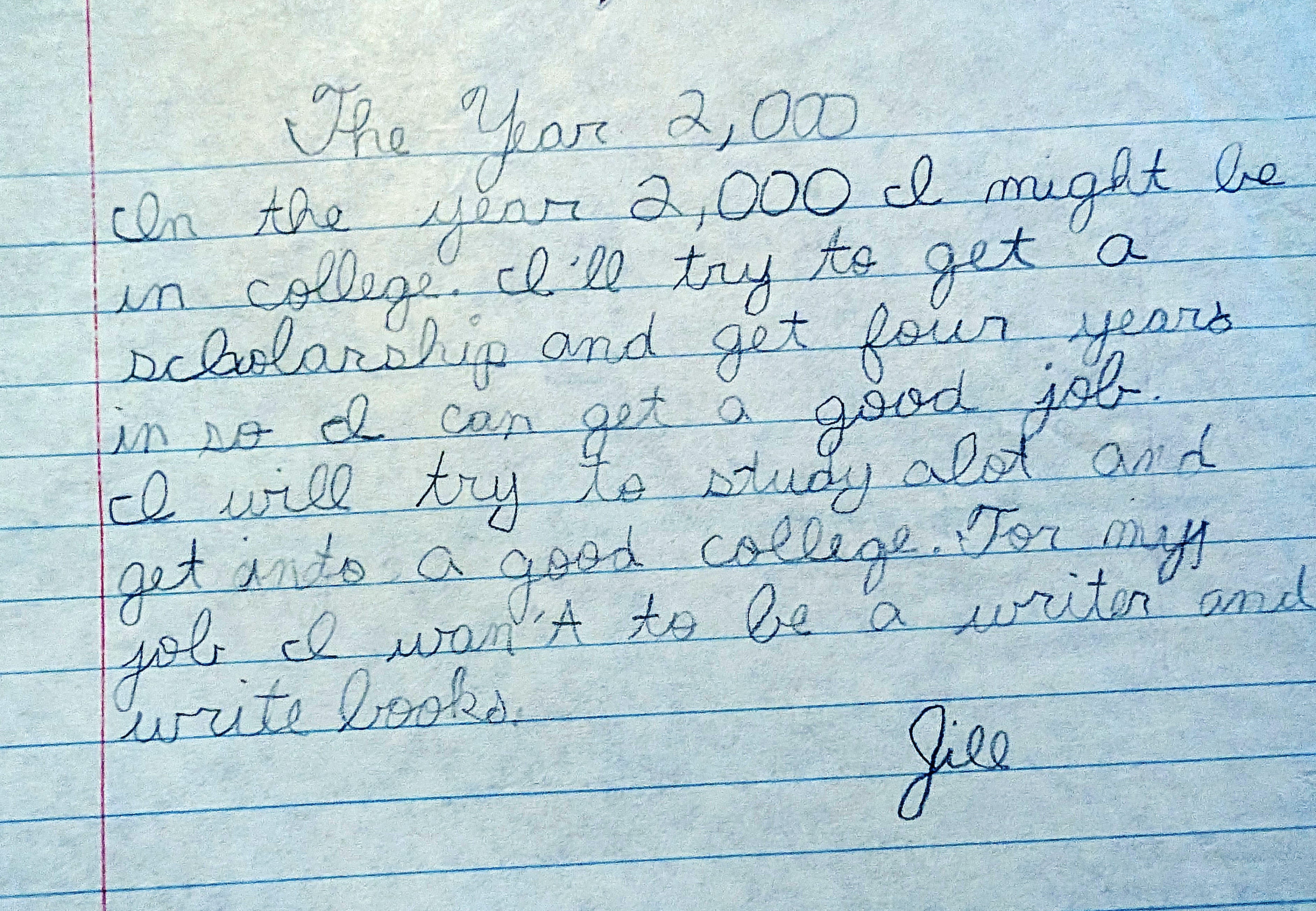
Which is to say, I am one of those earnest horse-girl types who has always been a writer. I haven't always been an athlete, runner, or adventurous soul, but I have always been a writer. This is the deepest part of myself, and it is also the part I’ve spent the most time denying. After declaring my intention to become a writer in my “Year 2,000” essay in fifth grade, I spent most of the next ten years focusing on math and science, hoping I would actually make something of myself. Journalism reeled me in during my senior year in high school, but I already understood this to be a bad career choice as the real “Year 2000” and the Internet age loomed. Still, I was hooked, and couldn’t even escape myself by enrolling in law school — because that’s when adventure started to call with more conviction. I realised that adventure and journalism must walk hand in hand — the drive to live intensely and learn profoundly.
But I continued to try to downplay it all. I turned to the editing side of journalism. I scribbled illegible missives in private diaries. I started a blog as a silly hobby. I wrote books that I chose to self-publish, so I would never be beholden to anyone because of them. I wanted freedom from writing. Freedom from writing meant freedom from myself.
What is this compulsion, exactly? Occasionally, I hear about a writer who has been able to give up writing altogether. Often this occurs after a traumatic life event. Once, a published author commented on one of my Facebook posts that she hadn’t written a word in years and didn’t miss it. It was as though that desire had been surgically removed from her brain. I remember replying that I was envious. After my father died in 2021, I experienced a similar shift. For months, I lived in a story that I felt no desire to tell. I shuttered my blog and even stopped updating social media sites for a while.
That September, three months after Dad died, I made a poor choice to enter an endurance bikepacking race while my head was still in a very dark place. My experience with grief, hopelessness, and suicidality during my six days on the route was so intense that I could not move away from it. I would have the memories surgically removed from my brain if that were possible. By December, I acknowledged there was only one way to stop the bleeding and resume healing. I wrote it out. I wrote it out because I hoped that others would see me, that my friends and family would see me. I wrote it out and haven’t returned to it. I rarely return to past writing, especially posts like that, because I’m loath to relive the pain. But I had to put it out there. I don’t understand why, but I did.
This is the heart of the compulsion, I suppose. I write because it’s how I’ve learned to process my experiences and feelings — to take the chaotic threads of life and weave a narrative that at least on the surface makes some sense. My husband will frequently complain that he can’t tell what I’m feeling until he reads about it on my blog. It’s a justified complaint. What’s harder to explain is that I can’t tell what I’m feeling until I write about it on my blog. It’s all a tumultuous spiral of noise until I can harness enough pieces to give it structure.
When I consider the vast uncertainty of the future, I wonder if I will — maybe for the first time in my life — give my whole self to writing. I haven’t been anywhere near that place for many years. Amid the disruptions that accelerated with the 2020 pandemic, I shuttered all of the book projects that had been languishing for a while. I let my old blog fade away and started this Substack as a personal archival project that I meant to remain mostly private. But I’ve since shuttered that project and essentially resurrected my blog, resuming old habits of personal essays largely focused on outdoor adventures.
Substack has been a great band-aid of sorts that keeps me writing without the angst and commitment of being a “writer.” And I’m beyond grateful for the connections I’ve made and maintained here. I don’t need a huge audience. I don’t need many thousands of people reading my stories. I’ve never needed that or even wanted that. Reaching a handful of people who get it — no matter how weird and disconnected I feel inside — just know that a handful out there really get it means everything to me.
But I do wonder if I can reach for something more. What if I return to long-form writing: book-length writing, deeper research, richer observations, connecting with people, and spending the time it takes to form a more complex understanding of the stories I still want to tell? In recent years, I’ve structured my life so there’s unquestionably no time for writing. And this has made life easier, more predictable. I’m happy here. But what if I wasn’t working 30 hours a week in a newspaper job, or learning French, or keeping a multitude of health appointments, or training for yet another ultramarathon? What if I have nothing in the scary and unknowable future but time?
I think, “I have so much privilege still. I could probably hike all day, cultivate a vegetable garden, ignore as much of the outside world as possible, and be content, truly content.” But that Richard Scarry-obsessed toddler still haunts me. And I continue to hear from people who “get it.” Sixteen years ago, I wrote a book over about six weeks while I was deeply depressed and sick with swine flu. I sat on it for another 1.5 years before tossing it out to the world while it was still in an admittedly raw stage. I see the person who wrote it as being so young and naive. Yet people continue to connect with that book. Just last week, Beat received a note from a person at his company whom he does not know:
“I just finished Be Brave, Be Strong by Jill. I was blown away by the honesty and storytelling. Inspiring read. I recently started riding again in the last few years after having a toe amputated. (no great story there) Anyway, signed up for the Leadville 100MTB Stage Race in summer 2026 and was looking for inspiring books to read. Jill's blew me away. Just thought I'd share.”
The toe thing? Melted my heart into a puddle. I don’t care what the story is. People who have complicated relationships with their toes get it. Also, I love hearing from people who have found their way to endurance sports.
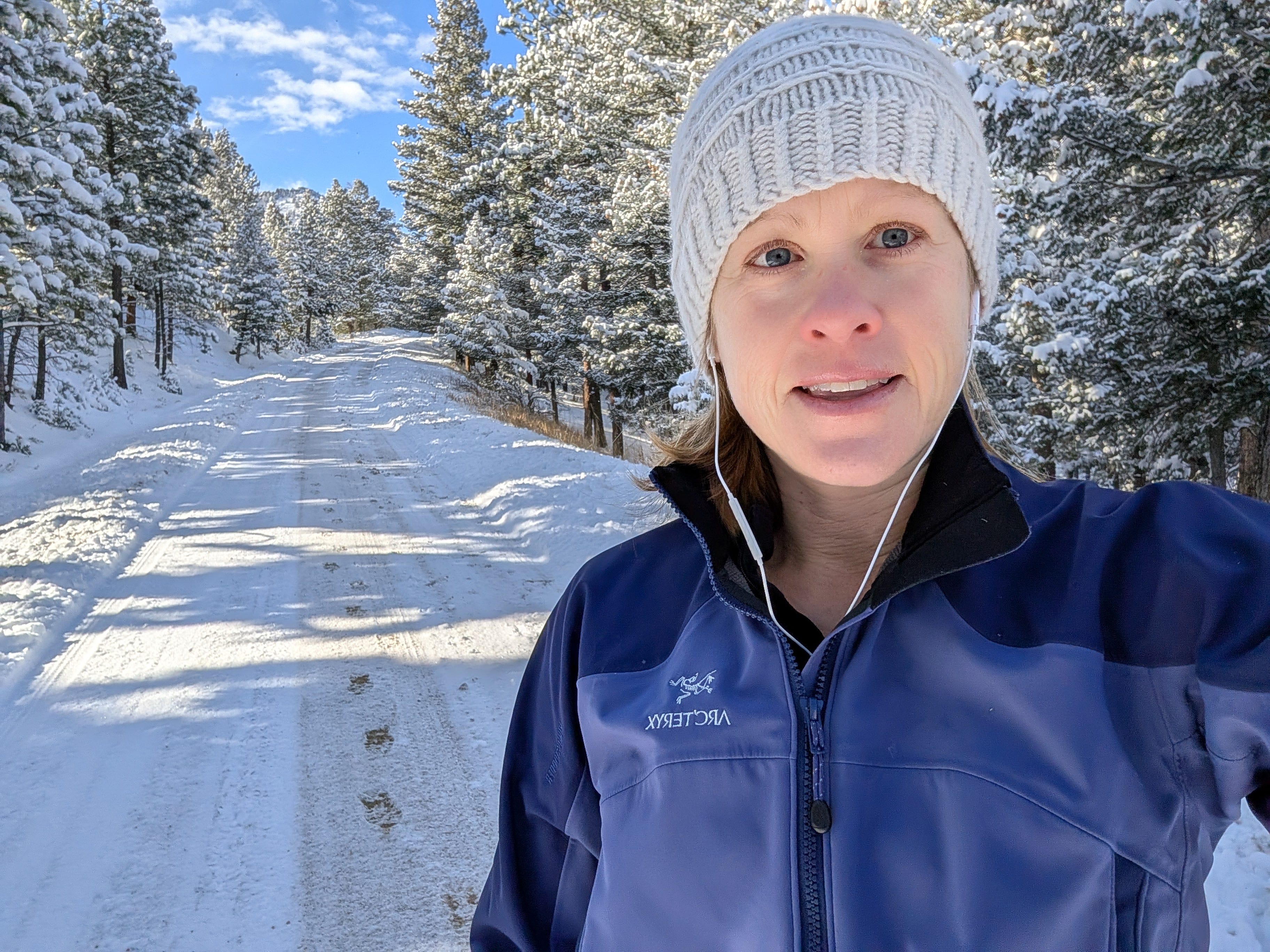
Today I ventured out for my first outdoor excursion since I walked out of the Alaska wilderness with frostbite on January 1. It’s only been a week, but it feels like another surreal lifetime ago. I mean, I was injured when it was 45 below. I genuinely felt like I needed to keep moving to save my own life, which wasn’t far from the truth. It was an intense and exhausting experience, and I feel like I’m still recovering from something much more physically intensive, like a hundred-miler. So I haven’t felt too eager to get back out there, but at the same time, I’m not ready to give up on my actual hundred-miler in March. I tried on multiple combinations of socks, stuffed toe warmers in my pocket, and fretted about the size of my shoes before finally getting out for a 4.5-mile walk, listening to my daily French lesson as I went.
The toe is doing well. The blister has given way to the raw, burned skin underneath. It hurts, and sometimes the side of my toe tingles disconcertingly, but by all appearances, the tissue is healing. I recognise now that I still carry a healthy amount of PTSD from my last frostbite experience in 2009. Back then, all five toes on my right foot were frostbitten. Blisters covered my toes, and the skin turned black. I needed to visit a podiatrist twice a week, and couldn’t look as she scrubbed and peeled away the dead layers of skin. Weeks passed before I even had assurances that I’d need no amputations. I had to keep my foot dry, keep it clean, hobble around icy Juneau on crutches, and endure the searing pain that still lives in my memory. I have been reliving those dark days while shaking my head at how I have managed to survive to age 46, and how am I still doing this to myself.
But through the pain and shame, I was loving my walk today. I’ve barely been outside since we returned from Alaska. Even though it was upwards of 60 degrees in Boulder earlier this week, I didn’t feel the warmth of the sun until I got outside at 22 degrees today. It felt as if someone had breathed new life into the world. Several inches of fresh snow covered the road and sparkled in the trees. I walked until I forgot about the pain in my toe. I walked until the horrors of the week faded into the background, replaced by comfortingly dull phrases in French: Ne t’inquiète pas. Tout va bien se passer.
And I thought, for all of my worrying and fretting, the path is fairly clear. Mary Oliver already laid it out in her “Instructions for living a life:”
“Pay attention.
Be astonished.
Tell about it.”
It is strange to think that we know nothing of what the future holds. But that’s okay, because oh, what a story it’s going to be.
I recently started keeping a nature journal, inspired by John Muir Laws book, "The Laws Guide to Nature Drawing and Journaling." I also watched a presentation he gave a couple of days ago, offered by the Aldo Leopold Foundation (https://www.aldoleopold.org/). The Mary Oliver quote (love her!) made me think of some quotes I noted from his presentation: "Putting things into my journal makes me present and slow." Journaling "slows me down to the speed of wonder." "Curiosity is the secret sauce for a happy life." Three prompts Laws suggests for a journal entry: "I notice..., I wonder..., It reminds me of..." I love your writing and am often inspired by it. Thank you.
Really beautiful honesty here — the tension between uncertainty and the impulse to create meaning resonates so strongly. I recently shared a short chapter reflecting on purpose, work, and identity that touched on similar themes. I’d love to hear what you think:
https://open.substack.com/pub/theeternalnowmm/p/the-eternal-job-chapter-three?r=71z4jh&utm_campaign=post&utm_medium=web&showWelcomeOnShare=true