
Healing through the apocalypse
Retracing my last run. Injury day 135.

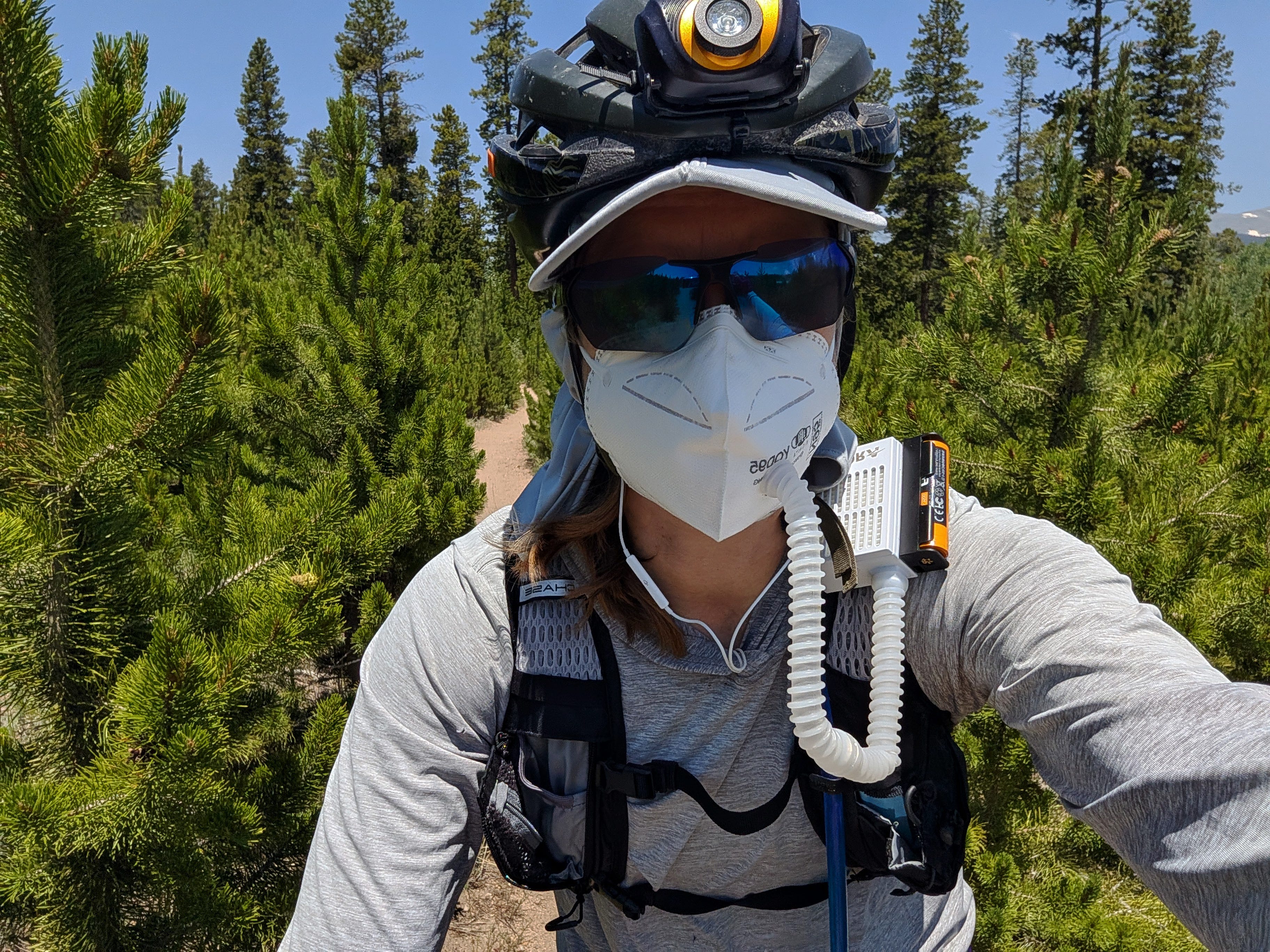
I woke up Sunday morning with an intense feeling of nostalgia about the social media landscape that used to fill my mornings in the Before Times — i.e., the 2010s. My friends would go on vacations, and I’d actually see what they were doing on vacation — surfing in Portugal and bike touring in Iceland. I would paste heart emojis in my sisters’ family posts about Taylorsville Days fireworks and my tiny niece on the Huntington Beach Pier. I would laugh at witty Tweets and scroll through the updates about the Western States 100. Wait, wasn’t Western States this weekend? I don’t have a clue what happened in this year’s race. Not even a rogue thread in my algorithm skims the carefree pastimes of my youth anymore. Isn’t that wild?
I could have looked up the Western States results, but I didn’t. Instead, I poured my morning mug of coffee and returned to what I had been doing for most of the week — at least, when I wasn’t working or doing my PT or researching and bashing out a barrage of articles about the Tour Divide. I refreshed multiple browser windows for Watch Duty, InciWeb, AirNow.gov, and Purple Air. I’m trying to figure out if a New Mexico fire near the Tour Divide route will threaten the event so I can update my bikepacking coverage. I’m trying to figure out if lovely Lofgreen in Tooele County has burned down. What about Eureka, Utah? I’m trying to figure out how much of the Tushar Mountains, which hold some of my favorite early backpacking memories, have been charred by the Cottonwood Fire. I’m trying to figure out if the Babylon Fire has reached Canyonlands Needles District yet. What’s happening with that fire near Scipio? What about the one near Ouray? Blew up, of course, but at least it’s moving north away from people. Wait, it snowed at Brighton Ski Resort this morning? How is that even possible? What about that fire near Fruita? Wait. What? Three firefighters were killed? The fire overran them so fast that they had to deploy their shelters, and they died. Two more firefighters were badly injured. Oh God. Oh God. I can’t breathe.
I was trying to explain to my sister why fire season is so distressing for me. The deaths and widespread destruction are very distressing, but it goes beyond that. Western wildfires have expanded so rapidly in recent years, both in reach and in unpredictability. Because of the changing climate, much of the destruction will not heal in our lifetimes. It’s been coming for decades, but in wildfire we experience these changes in fast-forward. We see everything we have to lose — the beauty of these lands, the activities we enjoy, the lives we’ve built — and we see how it can disappear in an instant beneath pillars of smoke.
And then there are the pillars of smoke, climbing toward the stratosphere and spreading for hundreds of miles. The widespread air pollution affects everyone. No one is immune. I can’t tell you how annoyed I feel when athletic types in my communities — people who won’t touch a morsel of ultraprocessed food for concern about what it will do to their health — will go prancing through literal purple air and then brag about their smoke-proof resilience. Sure, those PM2.5 particles have an instantaneous effect on people with respiratory disease, people like me, who face the threat of deadly asthma attacks during fire season. But these small particles penetrate deep into the lungs of anyone who breathes, entering the bloodstream and introducing systemic inflammation, which thickens blood vessel walls and increases the risk of heart attacks and stroke. The long-term implications are terrifying.
After all of the disheartening fire news, I checked Purple Air, and sure enough, AQI had spiked to 160. It climbed above 300 overnight. We’re hundreds of miles from the closest large fires, so the air quality is a crapshoot — whatever the jet stream carries our way. The wind can shift just a little, and suddenly the smoke is gone. But it can come back in minutes. I had a bad asthma attack in 2021 when I was caught by a surprise smoke plume while high on a mountain in Utah. That experience put the fear of God in me. I will never risk something like that happening again if I can help it at all.
So I refused to go outside, but I was also complaining to Beat about how sad I was to be stuck indoors. I’d been stuck all week indoors. I had made plans, and I was excited because I was finally going to ride my bike today. It wasn’t fair, I whined. And yes, I understand that my frivolous recreational plans are meaningless compared to the death and destruction wrought by these fires. But sometimes, we have a lot of emotions about events we can’t control, and sometimes we need to find a place to put those emotions.
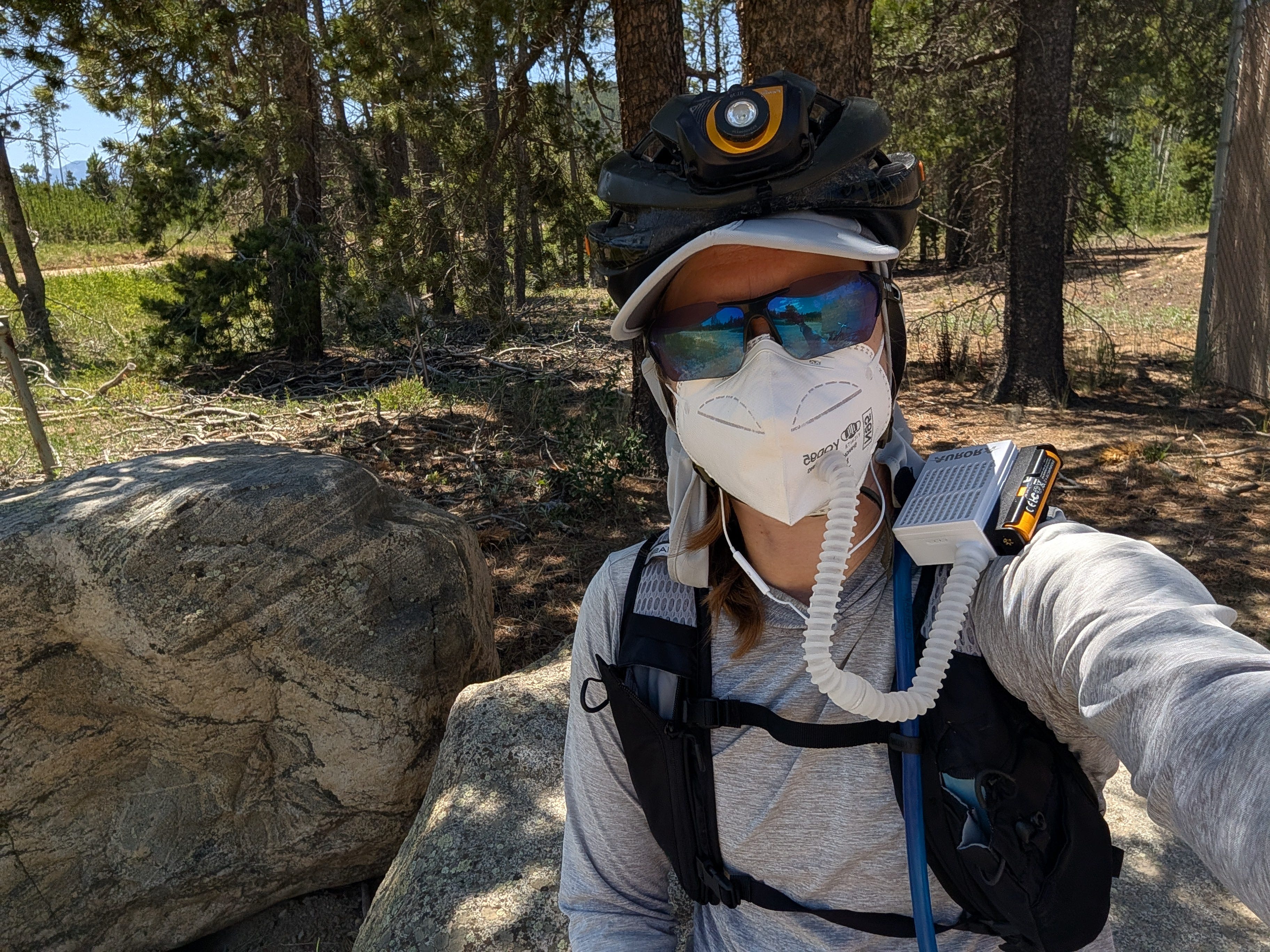
Beat suggested I use the HEPA mask that he’d retrofitted with an external battery so it could run on high power for up to six hours. The mask is fairly simple — the little box has a fan to draw air into a HEPA filter and push it through the plastic hose into an N95 mask. Breathing through a regular N95 mask during high-intensity exercise is unrealistic, since the wearer has to work hard to push excess carbon dioxide out of the mask before breathing in. It’s surprising how much easier breathing feels with air continuously released through the hose. It’s almost easier than breathing without a mask, although I found that when my heart rate spikes above 150, my respiratory rate is just a little too high for the mask to feel comfortable.
And yes, the mask makes me look like an overparanoid cyborg. It’s good to be in my 40s and not give a shit about how I look anymore. But I’m still convinced that everyone will want one within a few years. Consider the freedom, the worlds these masks can open up! My asthma attack in 2021 was a turning point in how I approach summer outdoor recreation, because I became aware of just how serious my personal risk can be. There’s no turning back from a scare like that, and I’ve become increasingly cloistered during the summer. But as I set out in the triple-digit AQI on Sunday, breathing better than I have in weeks, I suddenly felt invincible. I pedaled the steep, rocky gravel of a graded road washed out by a recent thunderstorm, and churned onto the sand of a jeep track that tripped me up just a week ago. Why had it tripped me up? Oh, right, my knee. I can’t believe I’d nearly forgotten about my knee.
Earlier this week, I’d hit a strange turning point with my 19-week-old knee injury. It was another thing I woke up with in the morning. It was Thursday morning. I stepped out of bed, walked to the bathroom, and walked back toward my closet before I remembered my knee. I’d be able to make all of those steps without thinking about them. After PT, I went for a 4-mile walk that felt like a walk rather than a desperate lurching struggle. I was able to hold an 18-minute mile, and nothing was sore, and I didn’t have to think about the mechanics of every single step. The motion had finally, FINALLY, become an unconscious motion again.
Is my knee back to normal? Of course not. I still have weaknesses and physiological risks. Now is the point where these weaknesses become particularly dangerous, because I won’t be thinking about them constantly and protecting myself in the process. My knee feels better. It’s not fully healed. But for today, on a bike where my risks are more limited, I decided to set out to finish the run that I hadn’t been able to finish 19 weeks ago.
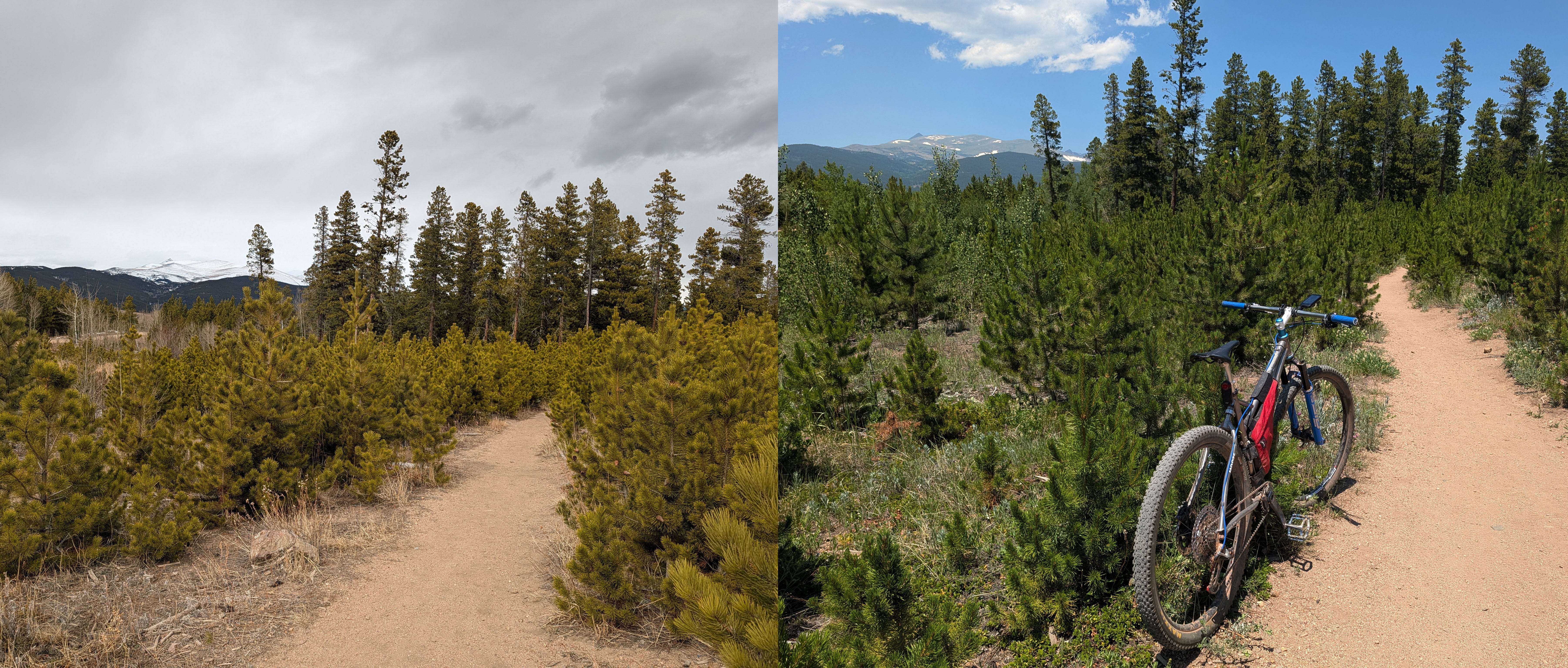
With the fitness I have right now, I can’t ride a bike much faster than I could run this route in February — at least until gravity launches me downhill at 25 mph. Back then, I was training for the White Mountains 100 and chose this route because it’s a good shakedown 50K with 3,800 feet of climbing on shorter, punchy climbs — so a similar profile to the race in Alaska. Plus, it’s runnable during snow season — not that there was much snow in February, a clear portent of the summer we were facing.
It is not February anymore. And I am very much changed from who I was when I embarked on that run. Still, it was exhilerating to return on this hot, smoky day, with all of my SPF layers protecting me from the fearsome UV, my knee brace, my mask. The world is burning and the warranty on my body expired a decade ago. Let’s live for today!
I was weirdly giddy given how grumpy and upset I’d been just hours earlier. Perhaps that mask was pumping more oxygen into my lungs than I realized. But also, bikes are pretty incredible joy machines. I’d nearly forgotten over the years, so focused was I on chasing ambition and increasingly intense adventures. A 19-week injury is an effective detox for athletic ambition. Not that I believe the ambition won’t come back. There is a reason that sober people are always alcoholics. But for now, the dopamine comes easily. Just being out in the world is more than enough.
I’d neglected to bring snacks, which isn’t a great plan for a 30-mile hilly ride over lunchtime. But the bonk just made me more lightheaded and silly. Not a great plan for protecting my knee injury, but I truly almost forgot about my knee. I was retracing the run that brought it all down, and I just let the bad memories float away on a slightly hypoxic puff of smoke. That is, until I reached my turnaround point and started to recognize the old pain. There’s the rock I sat down on to massage my leg when my IT band began to hurt. That’s where I saw the lady walking her dog and tried to run again. That’s where I leaned against the trail sign and slapped my leg in anger. There’s the rock where I sat next to the power station and cried. Here’s the hill where I pulled out my phone to text Beat. As I pedaled toward the top of the hill, I knew it. I was certain. Mile 17.75. This had to be it.
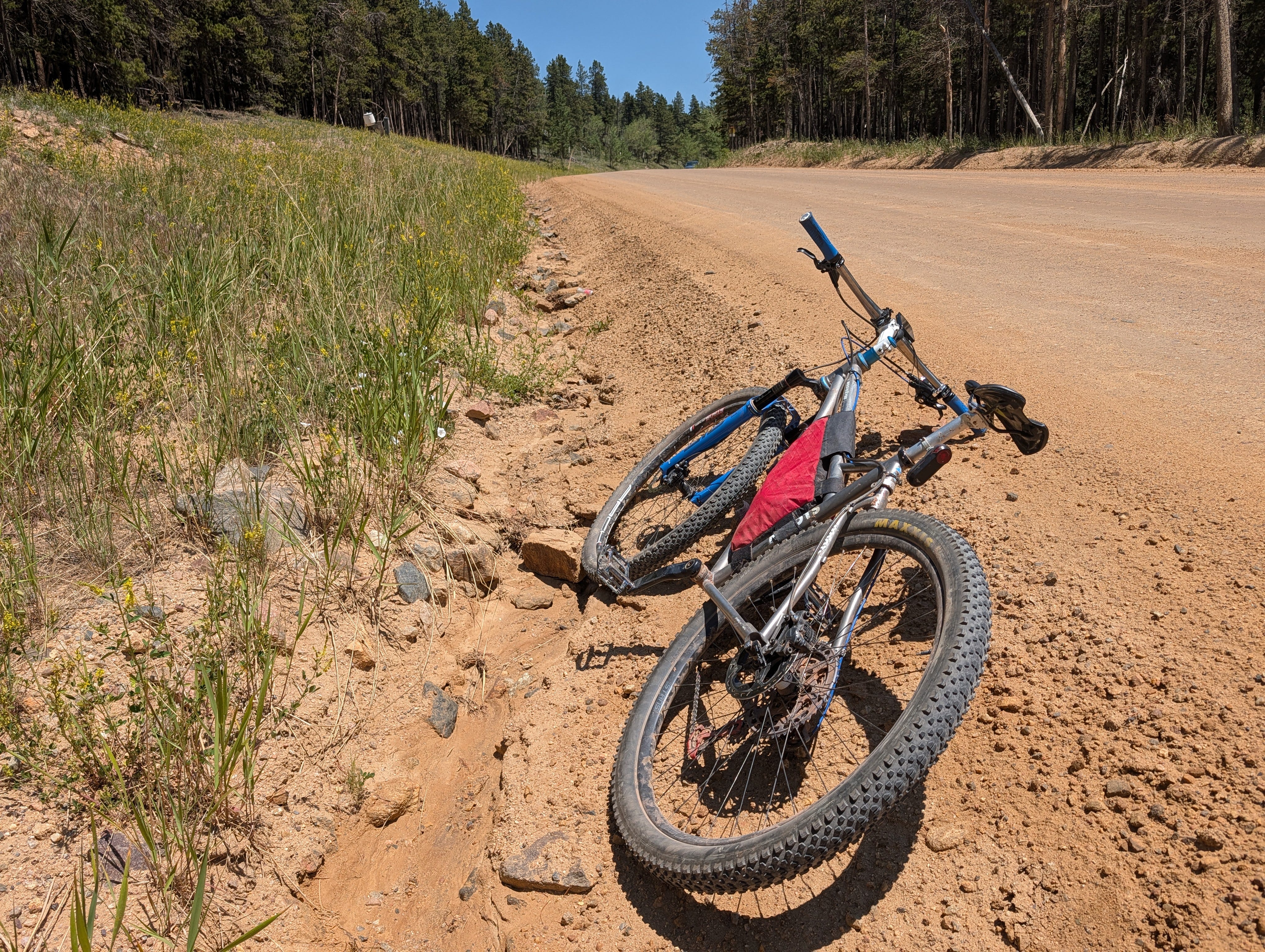
Here’s the place where I felt this flash of pain, like nothing I’ve felt before, and plopped down on my butt with my back to the road. I would crawl a short distance up the grassy slope — it was bare in February. But I wouldn’t get up again, not without help and not without crutches, for the next ten weeks.
I leaned my bike against the embankment to test its depth. It’s more than a foot lower than the gravel surface of the road, and steeper than it looks in this photo. I’d been wanting to return to this place to assess something that until now had been a theory. Here’s what I think led to my fateful fall. I was walking up a hill, and my gait was compromised by worsening IT band pain. I was walking on the left side of the road because that’s what pedestrians should do. I had my phone out to text Beat to let him know that I was having IT band pain, so the final 13 miles home would take a while. I continued walking while I texted him because it was 33 degrees out and I was sweaty and cold. But because I was looking at my phone, I wasn’t paying attention to my surroundings. I think I dropped my foot into this off-camber embankment, wrenched my knee, and tore my meniscus. It was a bad tear, so perhaps this was just the final force on a body part that had been deteriorating for a long time. But either way, I think this was it. A moment of inattention, a missed step, a long injury. Just one of those things.
By the time I returned from my ride, four hours had passed, the HEPA filter was still humming along, and I was in bliss. I was pretty badly bonked, but I again hadn’t thought of my knee in more than an hour. What a gift! The air quality had improved significantly, as an east wind pushed the smoke out of the Front Range. AQI was in the 70s. Usually, my reasonable cutoff to exercise outdoors is 50 or below. That’s how sensitive I am.
Sadly, home renewed my access to Watch Duty, where I soon learned about the Willow Fire west of Leadville, spreading to 1,000 acres in a matter of hours. I showed Beat the screen because he and his friend Daniel had been planning a big run over Mount Massive on Thursday. They are also supposed to run Hardrock in two weeks (Daniel is racing, Beat is pacing.) But the fire in Ouray is still spreading rapidly, as is the deadly fire near Fruita. And then there’s the Ferris Fire north of Cortez, filling Southwestern Colorado with smoke.
“Seems iffy,” I said. He agreed.
I recognize the great privilege we have in still thinking of these fires in terms of their effect on our recreational plans. But I also recognize how that could change for us in a heartbeat. Fire could be at our doorstep tomorrow. And the firefighters who died … so horrific.
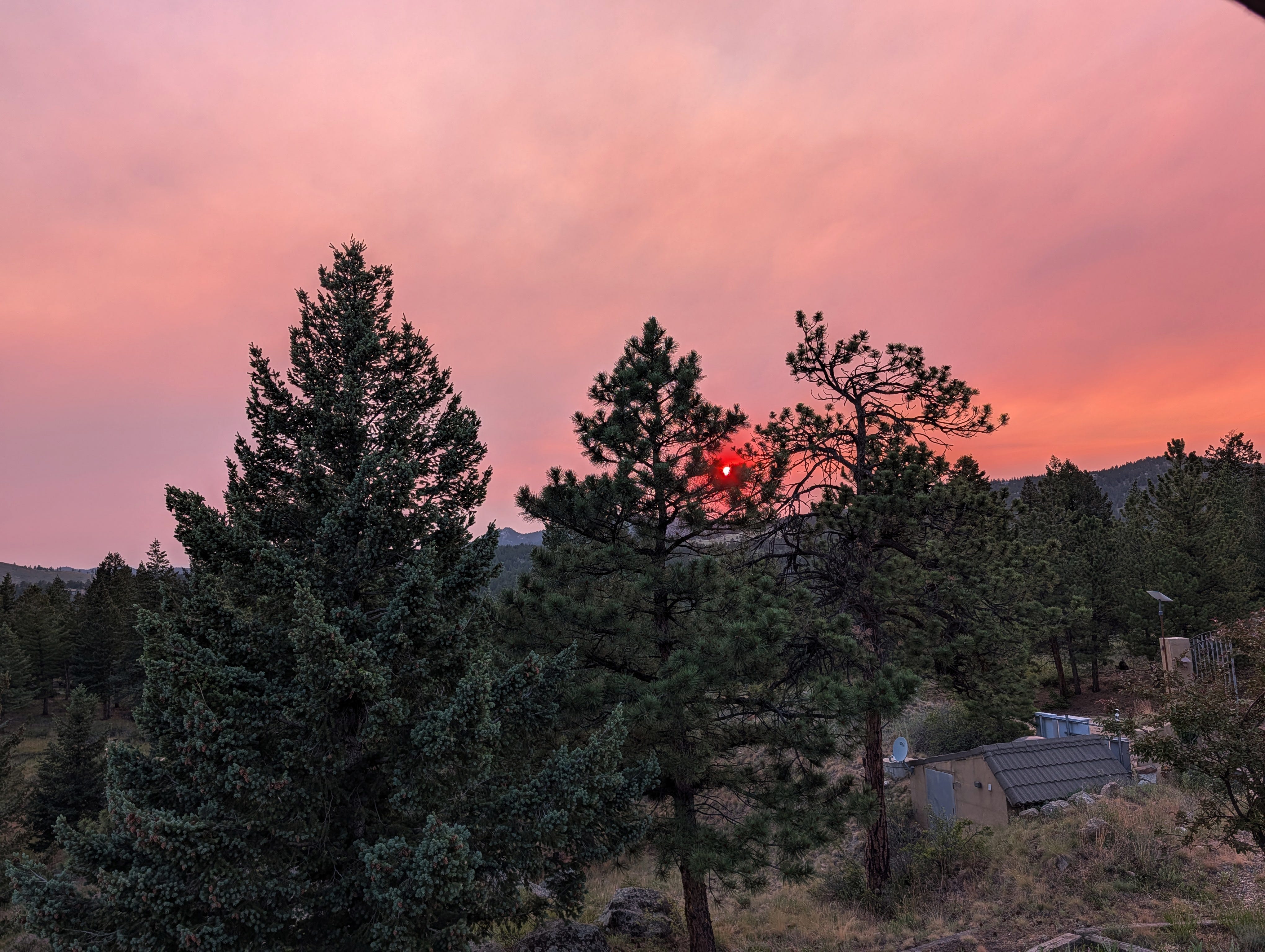
And now the smoke is back on our doorstep. It’s probably Leadville smoke, mixed with all of the other smoke. It’s all smoke. If you look at Watch Duty, I think you too will conclude that the entire states of Utah, Colorado, Arizona, and Nevada are on fire, and Washington State, too.
Some say the world will end in fire, some say ice. From what I’ve tasted of desire, I hold with those who favor fire. But if I had to perish twice …
Ah, Robert Frost. Now I’m remembering January 1, when I had frostbite and had to hike for 10 hours in temperatures dipping to 45 below zero with terrible pain in my right foot to get myself out of a backcountry cabin in Alaska and back to safety. Since I had to start my year that way, I tried to assure myself, nothing about 2026 could be harder.
How wrong I can be. So come at me, 2026. I’m stronger now, thanks to you. I have a renewed reservoir of mental fortitude, a pretty amazing mask, and a knee that I’m no longer thinking about. At least for a moment.
You’re welcome here anytime for our different allergens.
Great news about forgetting your knee - at least for some time. Thinking of you and Colorado.