
Subzero meditation
Even minds move real slow at 40 below

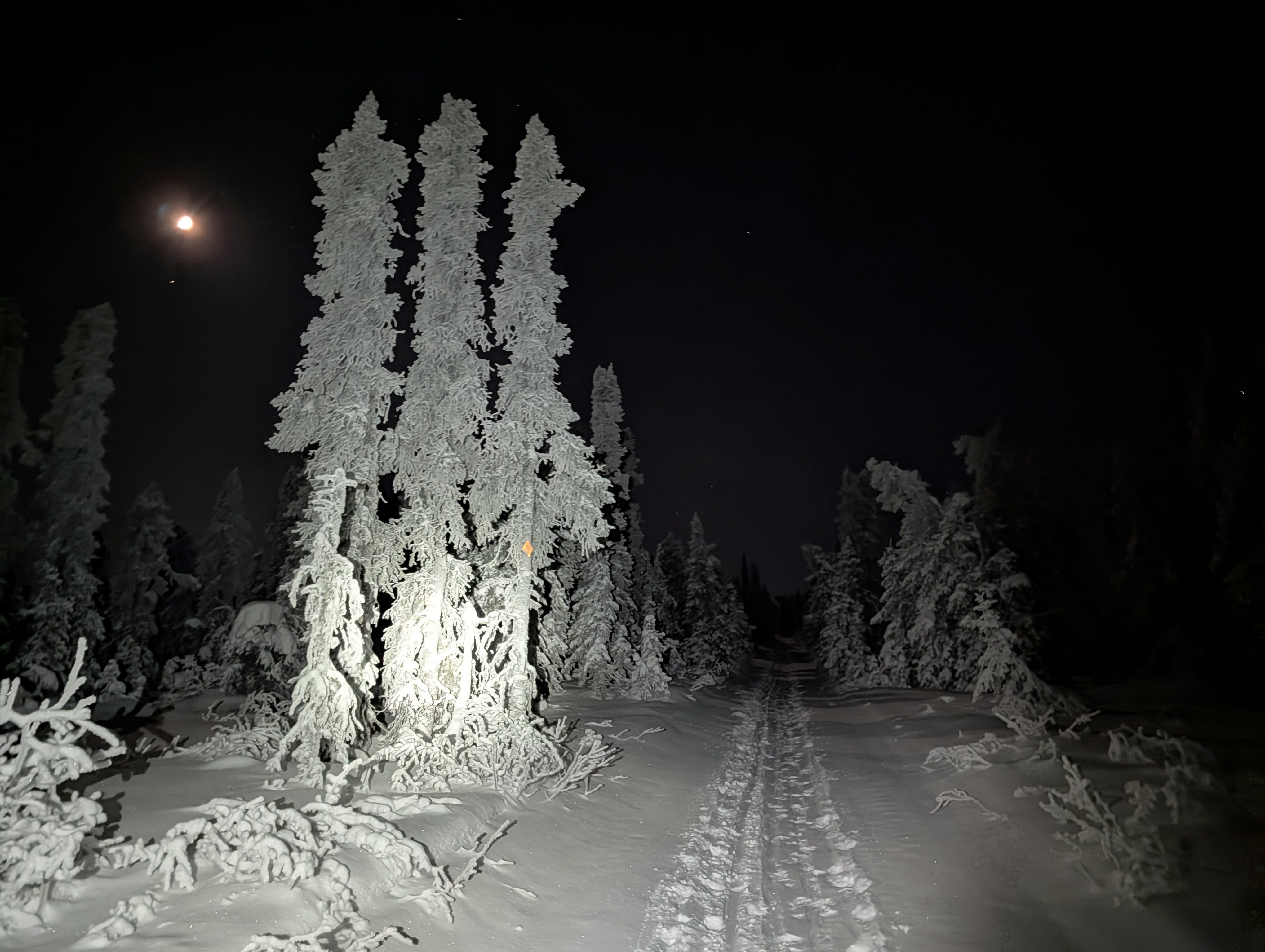
“I looked up at the mass of signs and stars in the night sky and laid myself open for the first time to the benign indifference of the world.”
― Albert Camus, L’étranger
Every time I return to Alaska, there will be at least one moment when I feel entirely spent, physically broken, and I’ll wonder if it’s finally time to sit down in the snow and let the cold consume me. It’s a moment when the crushing limitations of my body crash against the expansive wilderness and the endless starry sky, and all I want is to be free. It’s just an instant, this fleeting thought, but it always brings a strange and paradoxical feeling of peace. It’s not a feeling of wanting to die; it’s more a feeling of “Here is the universe. It expands infinitely beyond everything you’ve ever known. Don’t be afraid.”
I’ll stop, remove my face covering, take several deep breaths of air so cold it burns my throat, and feel a sudden rush of power. A second ago, I was quietly succumbing, but now I am vividly awake and alive. I live for the push and pull between these extremes: breathing fire in the frozen wilderness, tiptoeing to the edge of my strength, faltering, and then leaping to a previously unexplored dimension of vitality. I’m humbled by the reality that I am nothing here, and yet everything to myself. I’ll lean against the unmovable force that stopped me in my tracks, take an impossible step, and then another. Heat will flow through my fingers and toes, and I’ll continue moving forward. Frost will sparkle beneath the moonlight, reflecting the sky full of stars. Like me, the stars are rocketing through space. But the sky, the snowbound forest, and my rhythmic motion all hold the illusion of eternal stillness.
In this stillness, the noise of modern life fades. I can finally hear the almost inaudible whispering of that tiny voice that only speaks truths, in a rare moment when I’m humbled enough not to argue. She tells me everything’s going to be okay.
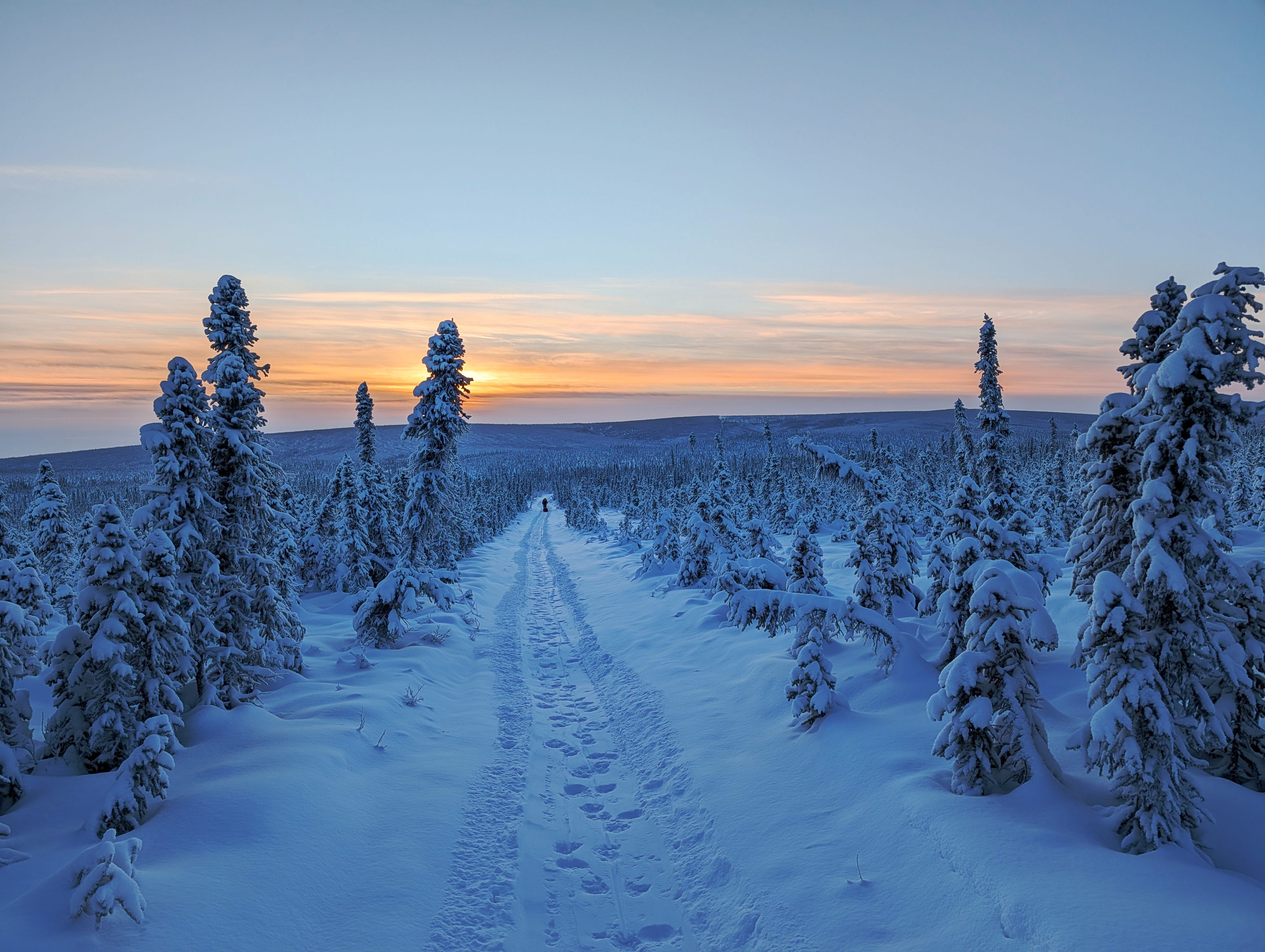
I’ve been trying to form a justification for why Beat and I keep embarking on these trips, even as the trails go unused and the cabins remain empty while the rest of the world retreats from the kind of cold that genuinely can maim you in minutes if you’re not careful. Even our Fairbanks friends regard us as though we’re a little bit demented. We’ve long held the rather flimsy excuse of “training,” but it’s not that anymore, at least for me. It’s been years since I signed up for anything as difficult as dragging a laden sled through fresh powder as temperatures drop to minus a lot. All of the squats and deadlifts I’m capable of wouldn’t prepare me for this, which is why I nearly always have at least one epic breakdown of both body and soul. And that’s what happened to me on Christmas Day.
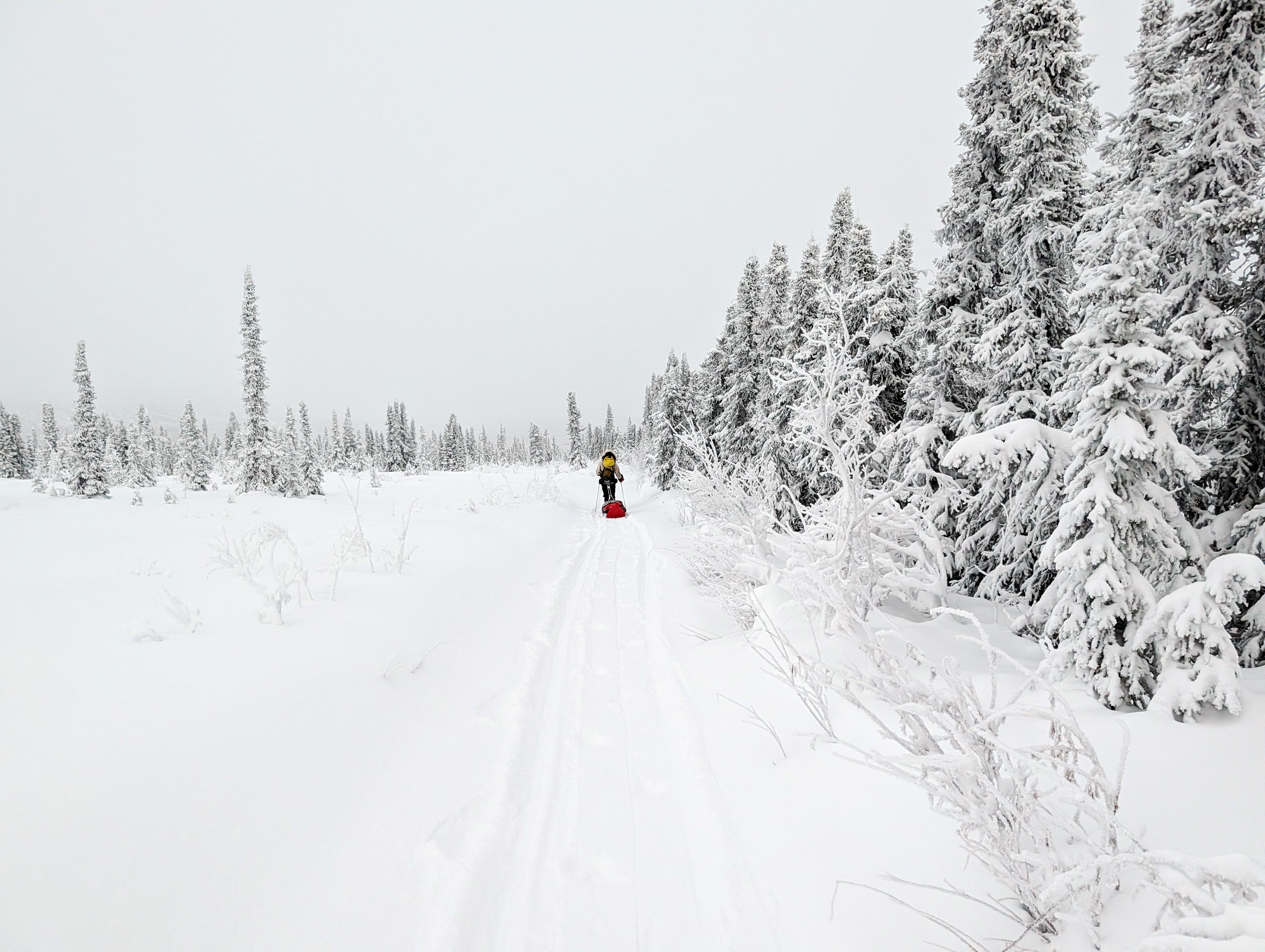
Beat and I enjoyed Christmas breakfast with our friends and then set out alone for what we hoped would be another four-day trip. Several new inches of snow fell overnight on Dec. 23, and no one had been out on the trails in the White Mountains since. Beat took on the work of breaking trail, but this cold snow doesn’t consolidate well, so I too was wallowing in sand-like powder. The temperature was a more gentle -10F, but a stiff breeze made it impossible to stop for even a few moments. Still, I broke into a heavy sweat as I strained to maintain a breakneck pace of 1.7 mph. I removed as many layers as I could tolerate without panicking, but this made short breaks even more harrowing. So it had to be a choice: Go heavy and stay warm but sweat out my base layer, or go light and risk losing the use of my hands within seconds if I stopped at all.
I chose option B and settled into a comfortable rhythm that helped me feel like I was not stradling the edge of disaster at all times. After several miles, I realized that I had fallen into a blissful sort of peace, my mind as blank as the overcast sky. Meditation is effortless when both body and mind are honed in on basic survival.
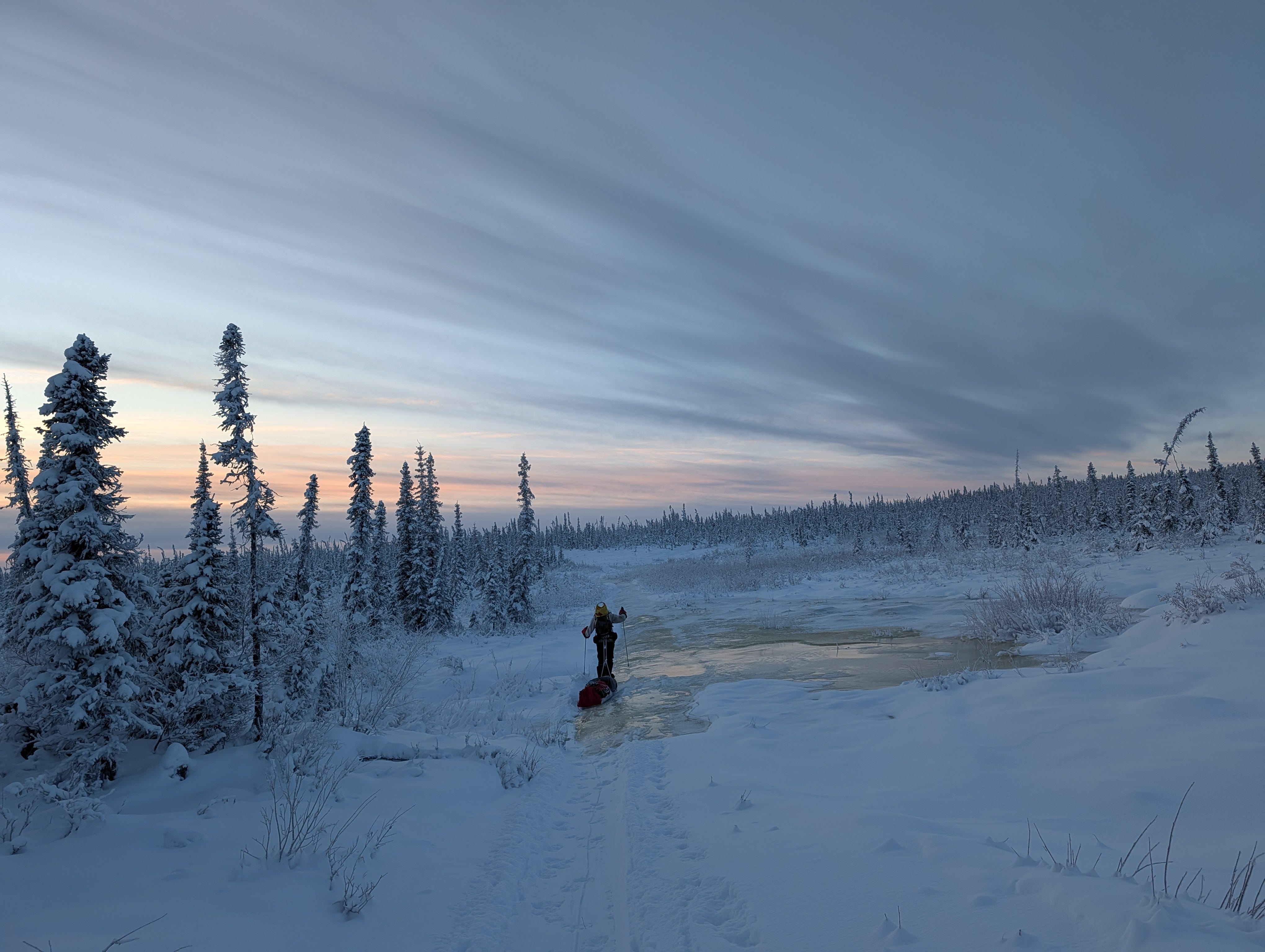
I managed to maintain this flow of tranquility until mile 11 (six arduous hours of travel) when I encountered a section of slushy overflow — groundwater that had seeped to the surface of the snow and was not yet frozen. I saw Beat’s footprints and thought I could follow his path, but I admit I know better. Overflow is ever-changing and requires excessive care in subzero temperatures. Still, I made the lazy choice and ended up stepping into a slush hole that plunged to my mid-shin and sloshed around the sled. Overboots protected my foot from getting wet, but the rapid ice buildup around both shoes and on the bottom of my sled slowed my snail pace to a literal crawl.
The sled might as well have been glued to the trail. The ice hardened instantly, and I did not have the proper tools to remove it — my fingernails were not cutting it. My knife and the prospect of slashing my sled and gear were too scary. I was also carrying a couple of pounds of ice in each overboot, although I wasn’t aware of that at the time. I only knew that I felt like a dog that had been tied to a curb, straining against my leash and going nowhere. I had three more miles of this at a nearly maxed-out effort. I imagined one of those CrossFit guys at my gym back home, bent away from a torque tank set to maximum resistance.
The steep climb to Yeager’s cabin is where I had my moment. Utterly spent. Like I truly couldn’t move another inch. After my brief flirtation with the icy void, I contemplated breaking down my sled and moving lighter loads up the hill in two or ten more trips. Then I took the necessary deep breaths and felt awe for this unfathomable place, and with renewed vitality continued trudging forward.
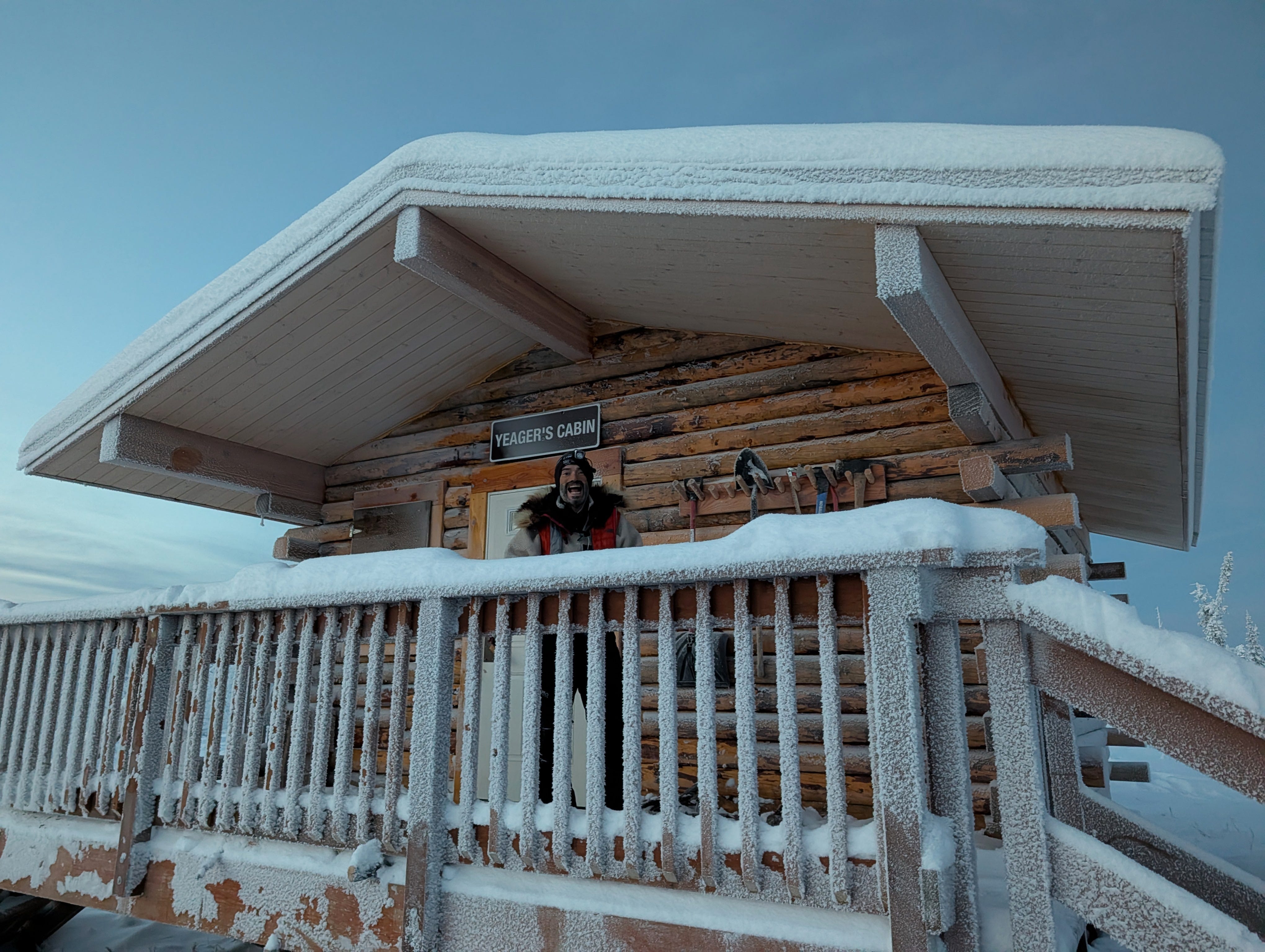
Beat and I spent a lovely night at Yeager’s Cabin. There was a large stack of logs left behind by firefighters who had battled a blaze nearby last summer. The cabin warmed to room temperature, and I was able to finally remove my footwear and the mass of ice beneath my overboots. We dined on bags of pasta and lemon cookies. All was right with the world again. But we were both exhausted and questioning whether we’d continue with our planned trip if we had to do all of the trailbreaking, which seemed likely.
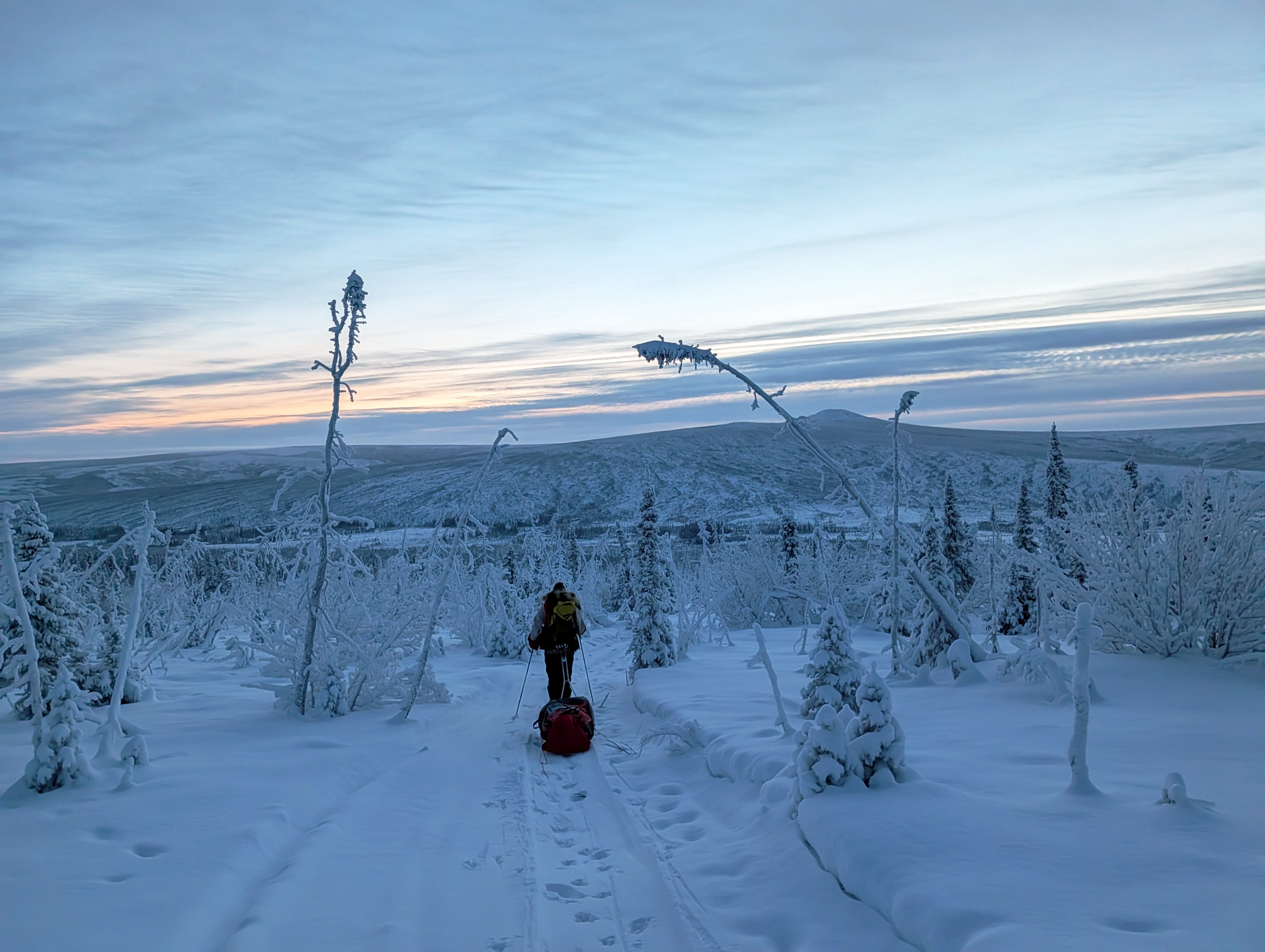
On Boxing Day, skies cleared and temperatures plunged to -36F. My body was sore almost everywhere. The thawed sled still dragged as though it were trapped in another dimension. I couldn’t get away with light layers at -36, but the effort still left me more than a little damp with sweat. We only had just over 9 miles to travel to our next cabin, and it would ultimately take me nearly 6 hours to tear myself apart with … well … it doesn’t feel appropriate to call this walking. Torque sled workout?
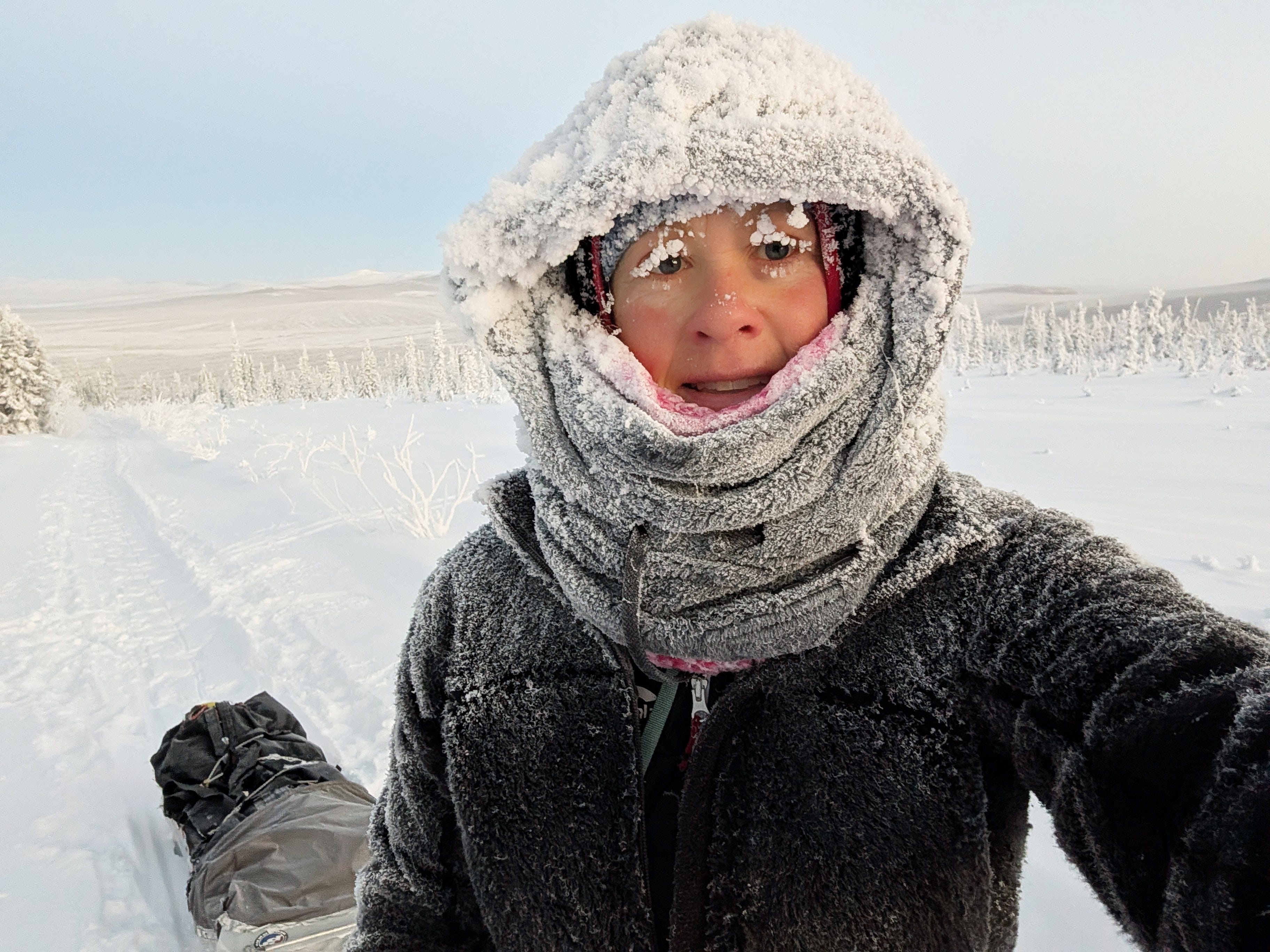
I tolerated the sweating for a little too long and finally lost the heat from my clammy feet as I trudged up the Wickersham Wall. We were so close to the cabin that I chose to ignore the creeping pain in my toes, which is always the wrong choice to make. I know this. Lesson number one of travel in deep subzero cold: When you have shit to deal with, deal with it now. Later is often too late.
The cabin, as we’d expected, didn’t have a stick of firewood in sight. Beat had hauled two DuraFlame logs for this purpose, but at -21F — the temperature on the ridge at the time — those controlled-burn ambience logs don’t go very far. The stove also had a broken damper and other issues that meant it was mainly useful as an open fireplace. The fire burned so cool that we could put our shoes directly on top of the stove and it didn’t even begin to melt the ice coating them. Not an ideal way to spend a night at these temperatures, especially when our only known source for firewood was an burn more than a mile away, down and back up an enormous hill. Exhaustion and a 1.7 mph pace meant the gathering process alone would consume so much time and energy that a desperation bivy in a cold cabin was the more viable option.
I stomped around the dark cabin on my frozen feet, feeling utterly demoralized. “I don’t want to go to Moose Creek tomorrow,” I said to Beat. “I just want to walk out.” I regretted my proclamation as soon as I said it. I’d loved being out in the Whites, having no obligations but to move forward and keep myself alive, and yet having those tasks feel monumentally meaningful. But an entire night of fighting the chill without the peacefulness of motion — that level of effort was too daunting to even imagine.
We decided to heat water, cook a meal, change out of our sweaty base layers, and walk out that night. It was only six more miles, but the -25F ambient temperature plunged to something ungodly with the stiff wind now whipping along the ridge. Still, I was dry and fed, had finally warmed up my feet, and I was so grateful to again be moving through the expansive night. The half moon was bright enough that I could march with my headlamp turned off, tracing the shadows of ghost trees as I scanned the sky for aurora.
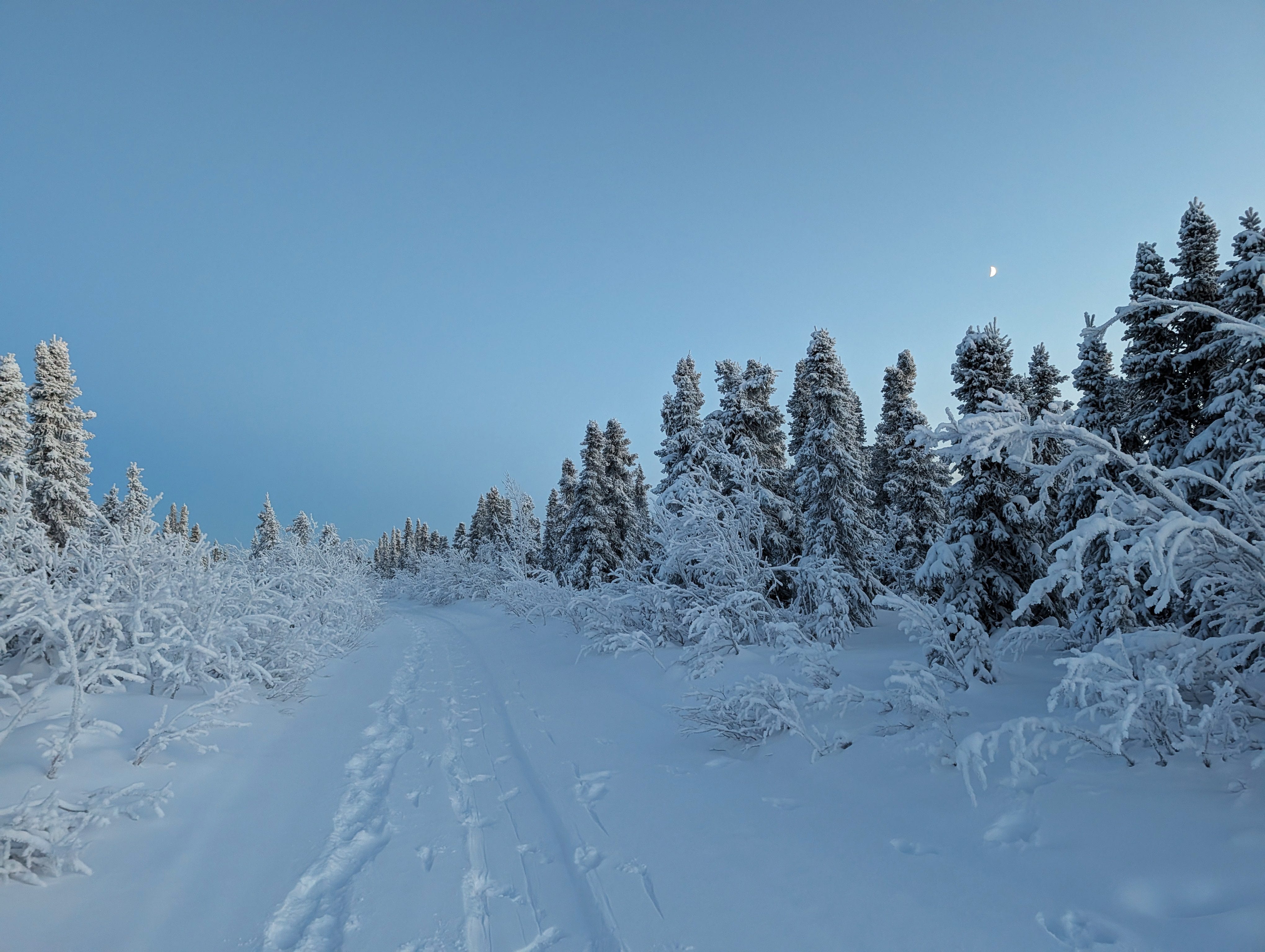
Coming back early gave us a few more days to spend in Fairbanks before we set out on our final New Year’s Trip. We reworked our plan to follow more familiar terrain on trails we broke ourselves now that we understand that likely no one else will head out there as long as this cold snap persists, which it has and will. We also had time to visit with friends and do normal vacation things like go out to dinner.
Navigating everyday life at 40 below is almost more daunting than being out in the wilderness. We cold-started an angry vehicle and descended from the ridge into the apocalyptic ice fog that surrounds the city. When I stepped out into the Fred Meyer parking lot, I could barely breathe, drowning in a soup of exhaust and vapor. Hands and feet froze as we rushed toward the store, where we bought frozen foods but not fresh fruit because it wouldn’t survive the wait in the car. Then we drove to downtown Fairbanks, where people were just going about their lives as though air they breathed wasn’t trying to kill them. There was a cyclist on an old mountain bike with only a single pair of gloves, and teenagers in jeans walking down the street. We parked a mere block away from the restaurant and had to break into a sprint before we reached the door. Nearly every table at the restaurant — one of 19 Thai restaurants in the city of Fairbanks, population 32,000 — was full at 4:30 in the afternoon. A 4:30 p.m. that feels like midnight. It was just a typical Saturday night. But I could only blink in disbelief that people live here.
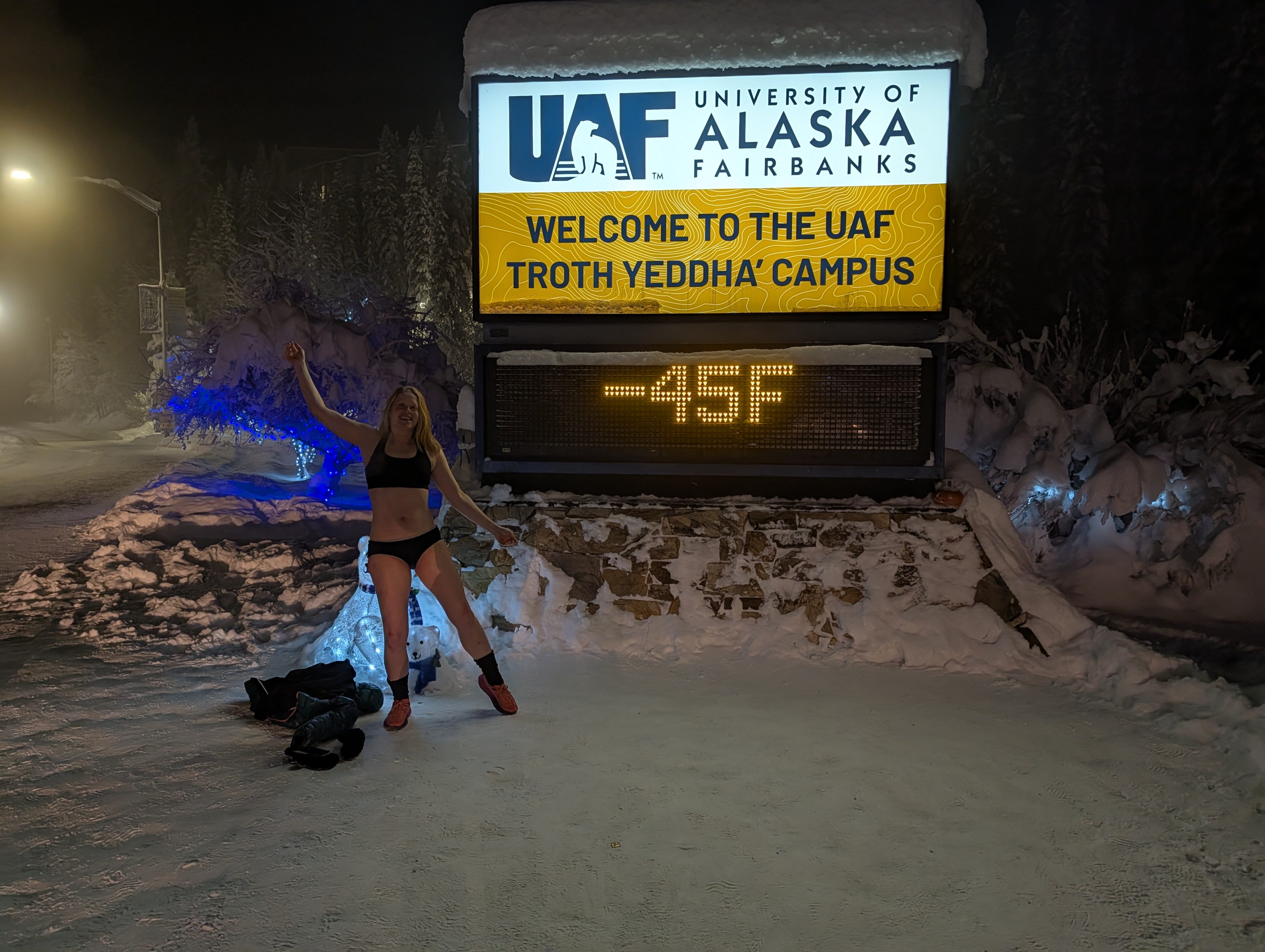
So we’ve tried to join the Alaskans in having fun with it, being a little silly. Life gets real at 40 below, but people adapt. Meanwhile, I can only think about returning to the wilderness, and how scary it is, but how much I crave that feeling of peace. I still haven’t found the words to justify it, only more Camus quotes:
“Life can be magnificent and overwhelming — that is the whole tragedy. Without beauty, love, or danger, it would almost be easy to live. ”
― Albert Camus
Well written as always Jill.
Love it. Your desire for adventures of all kinds is inspiring. Great stuff