
The coldest Solstice
Spending my holiday vacation in a place where it’s 122 degrees colder than home

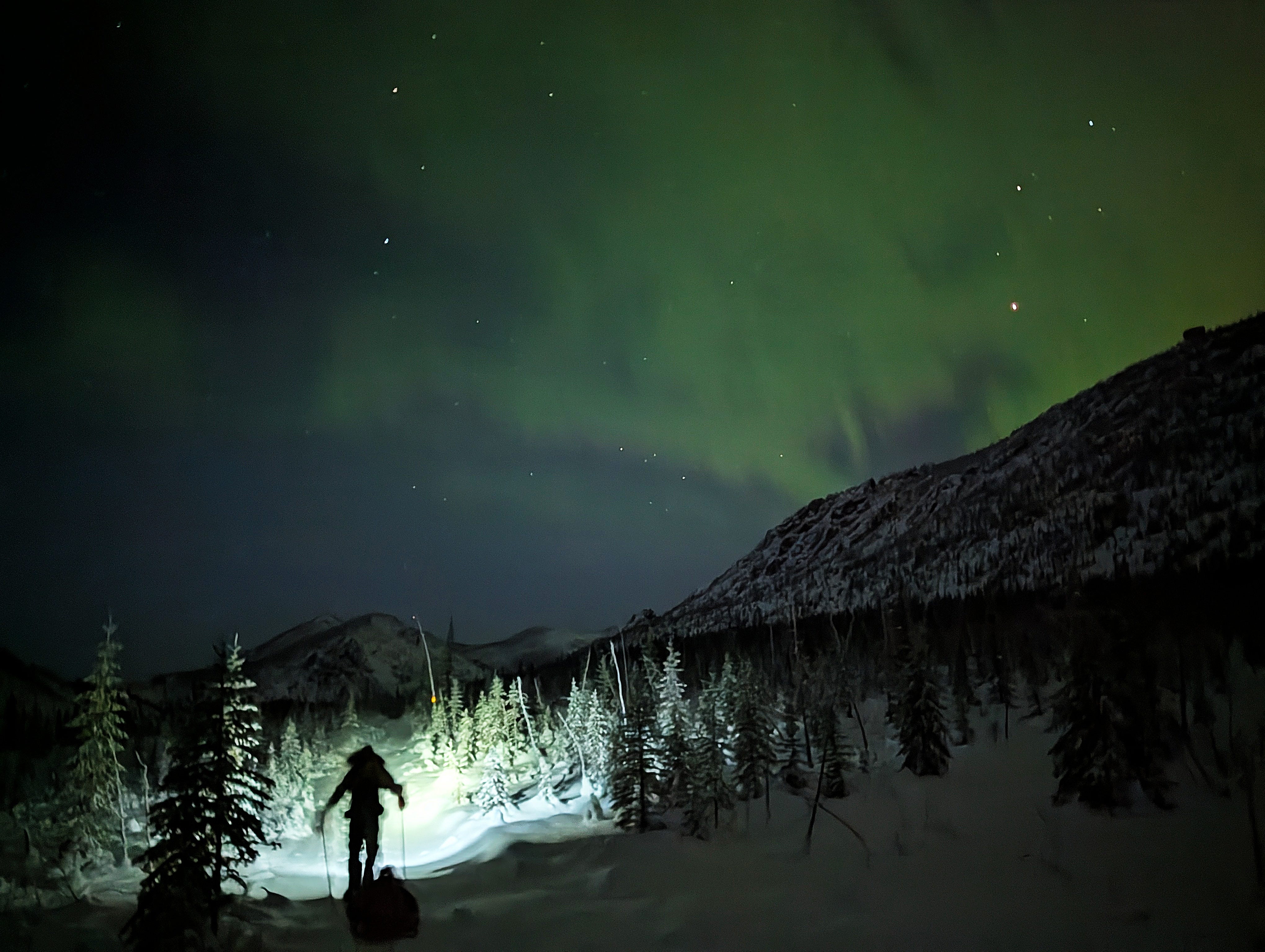
I wish there were a way to describe 45 below. The way the world doesn’t move, that even sound seems frozen, until you stop to breathe thick clouds of vapor into the stillness and hear the faint chiming of ice crystals. The way frost coats a forest of skeletons and ghosts. The way your body strains for the slowest of motion, muscles as rigid as the zippers on your bags. The way the air seems to lurk like a murderous phantom, but you feel safe somehow in your cocoon of fuzzy polyester. The way everything seems good and right in this infinite instant that you occupy, until the attachment to your sled harness snaps, and suddenly you’re snapped toward the unknown future, wracked with fear and desperation.
You need the contents of that sled. You have to fix this — somehow wrestle open your badly contorted and now-rigid plastic tool bag, remove the metal pot and stove that burn your fingers like fire, find the spare straps and carabiners, and rig up a new attachment with bare fingers as blood retreats from your feet, hands, and face. You should have put on your big coat before all of this, but you were a little bit panicked. By the time you finish, you’re wracked with shivering. You think you’ll be okay once you start moving again, but once the cold blood starts circulating, you feel like you’re being stabbed with little daggers all over, even in strange places like your elbows and thighs. You try to run, but your muscles seize. Your whole body feels like it’s going a little bit haywire, the circuits misfiring. So, you remind yourself to breathe, allowing your brain to return to the moment, to the march. You know that as long as you keep moving, you’ll be okay. But you want to feel safe again, to climb, to generate heat, to be free of this frigid basin. So you murmur a little prayer to the Aurora Borealis dancing through the predawn darkness overhead, “Please let the Wickersham Wall come soon. Please let the Wickersham Wall come soon.”
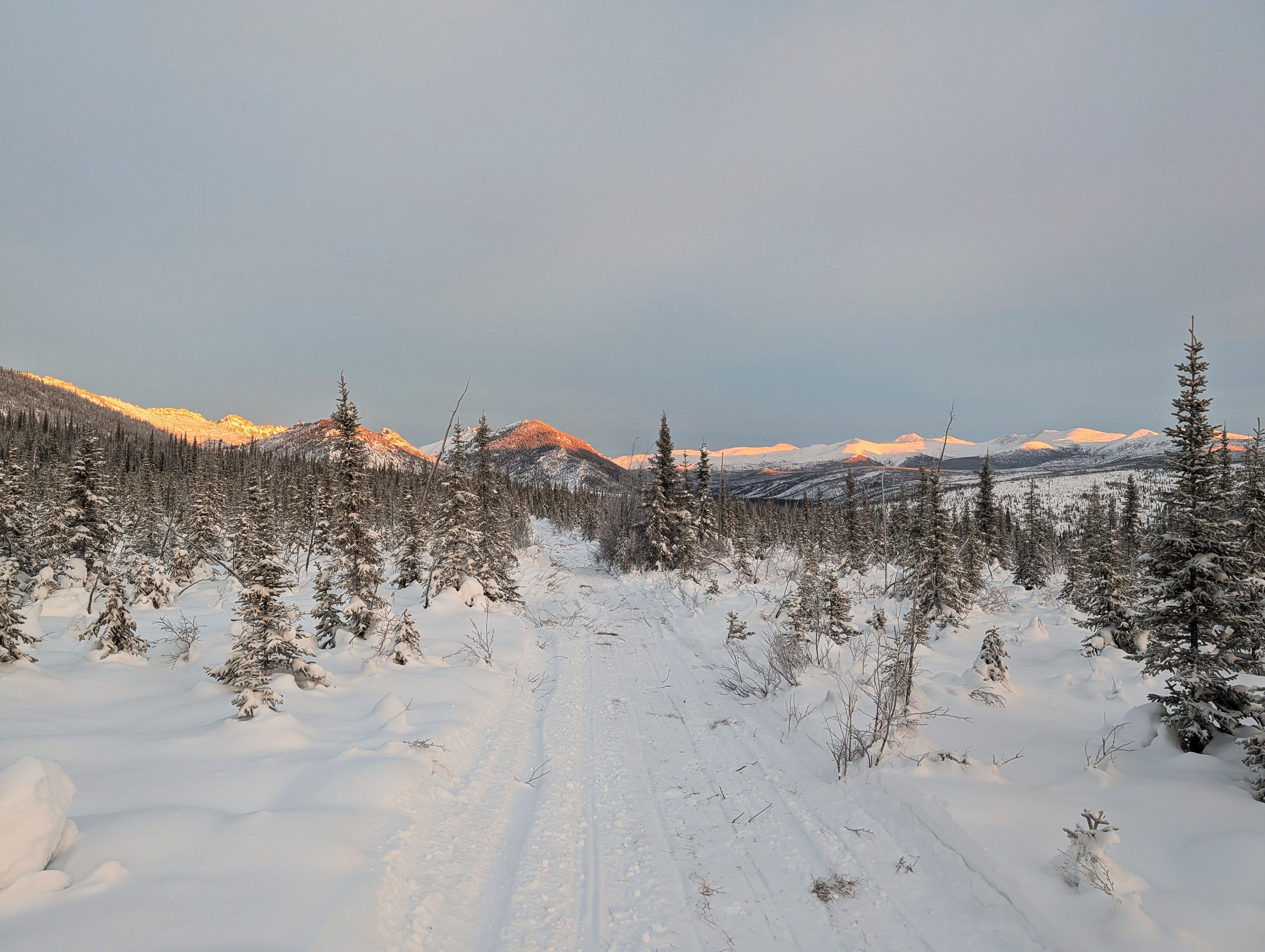
Beat and I flew into Fairbanks in the midst of Northern Alaska’s most prolonged cold snap in many years. Temperatures were forecast to remain in the negative double digits, save for perhaps a hiccup toward zero around Christmas, for the entire 2.5 weeks we planned to stay. We were intimidated but also excited, weary from the prolonged heat wave in Boulder. For most of December, we’ve been beleaguered by high winds and temperatures that would be better suited to June. The sound of wind rattling the house day and night, combined with constant red flag fire danger, had frayed my last nerves. On Wednesday, I went outside to run in a T-shirt, braced against a howling 40-50 mph gale that tossed me all over the trail, and came home to a power outage that would last for days. On Thursday, I got on a plane and stepped into the expansive silence of 20 below.
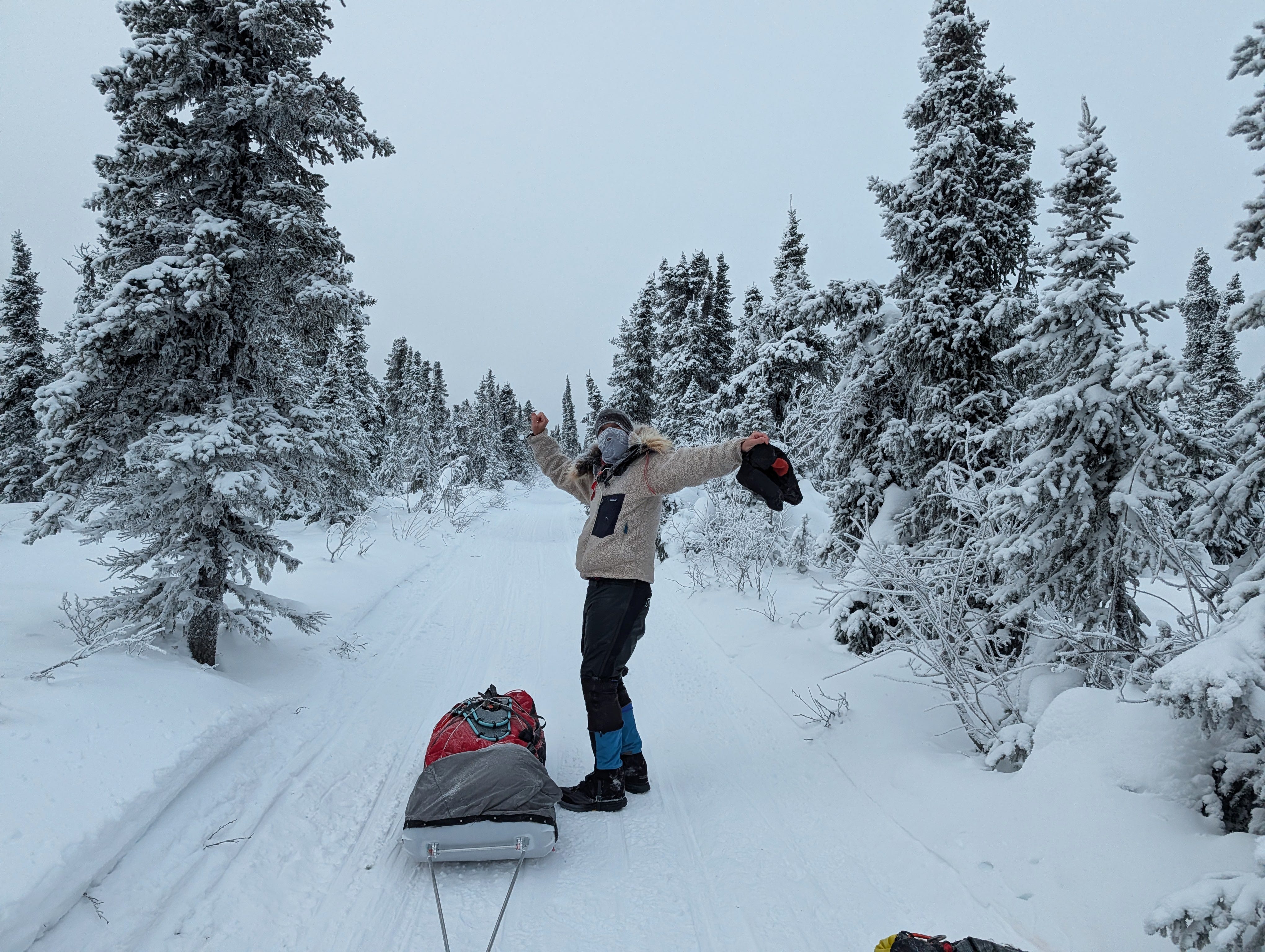
On Friday, Beat and I set out on the first of three planned multi-day cabin trips in Alaska’s White Mountains Recreation Area. The cabins must be booked 45 days in advance, so we never know what we’re going to get. Now we had a forecast that all but promised prolonged periods of 40 below in the low-lying valleys, a weak to non-existent inversion that meant even the ridges would be cold, and just three and a half hours of dim winter daylight. As our lifelong Alaskan friend Eric said matter-of-factly, “not even the trappers go out in this weather.” So we weren’t surprised to see only one other car at the trailhead that morning.
It was 15 below zero on the ridge, which felt like being plunged into an ice bath, given our acclimation to 70 degrees in Boulder. But bodies can adapt in amazing ways, and just four days later, minus 15 degrees would feel like a heat wave.
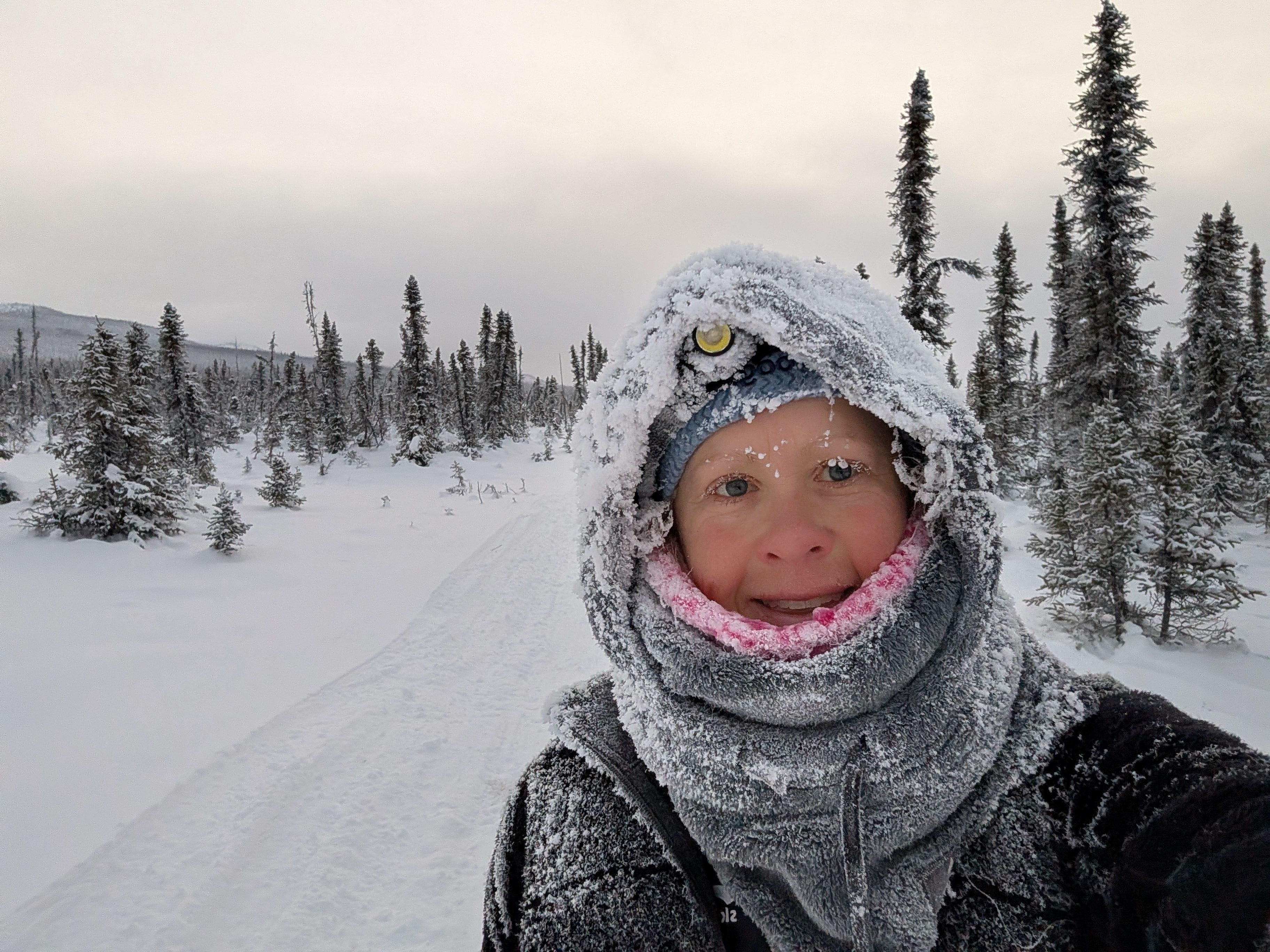
Our first day on the trail — 19 miles to Borealis cabin — was overcast and calm. The cold snow was predictably abrasive, and dragging a laden sled that I hadn’t touched in almost 365 days predictably felt like dragging a dead body through molasses. Beat and I keep our own pace when it’s so cold, as stopping for more than a few minutes can become an ordeal (as I noted above.) So I was all alone in this black-and-white world without even the occasional gray jay to keep me company. Every once in a while, a pink strand of tape tied to a tree would pop like an electric neon sign, and I’d recognize how deprived I’d been of color. I’d stuff a handful of dried cherries into my mouth, experience a zing of electric tartness, and recognize how deprived I’d been of any semblance of taste or smell in this frozen world. I retreated into meditative breathing and felt wholly at peace.
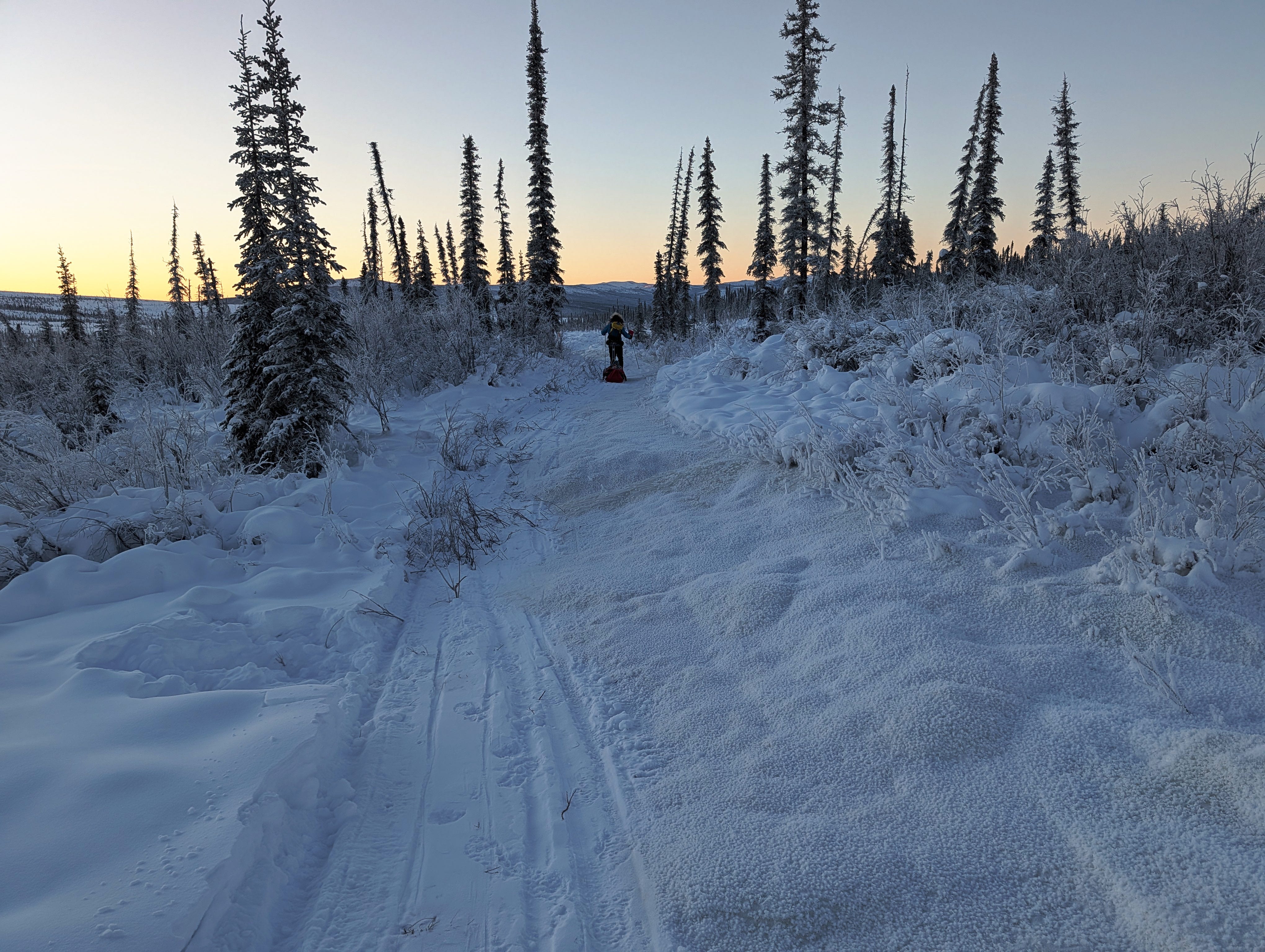
My reverie broke only a few times, to respond to the needling breeze by tightening my balaclava or loosening it again to take a sip of water. But I was violently jolted when I placed my left foot on an obscured section of aufeis (sloping ice that forms when groundwater seeps to the surface and freezes) and felt an invisible force whip my body sideways. I threw my arms up in surprise and landed directly on my left boob. That hurt a lot, and I screamed many obscenities into the expansive silence. Pulling myself up from my fall, I thought, “Damn those sensitive parts, but probably good it’s my boob, at least there’s a little cushioning there.” But later I’d think that it would have been better if my breasts were bigger, because I think I may have bruised a rib or two on my left side.
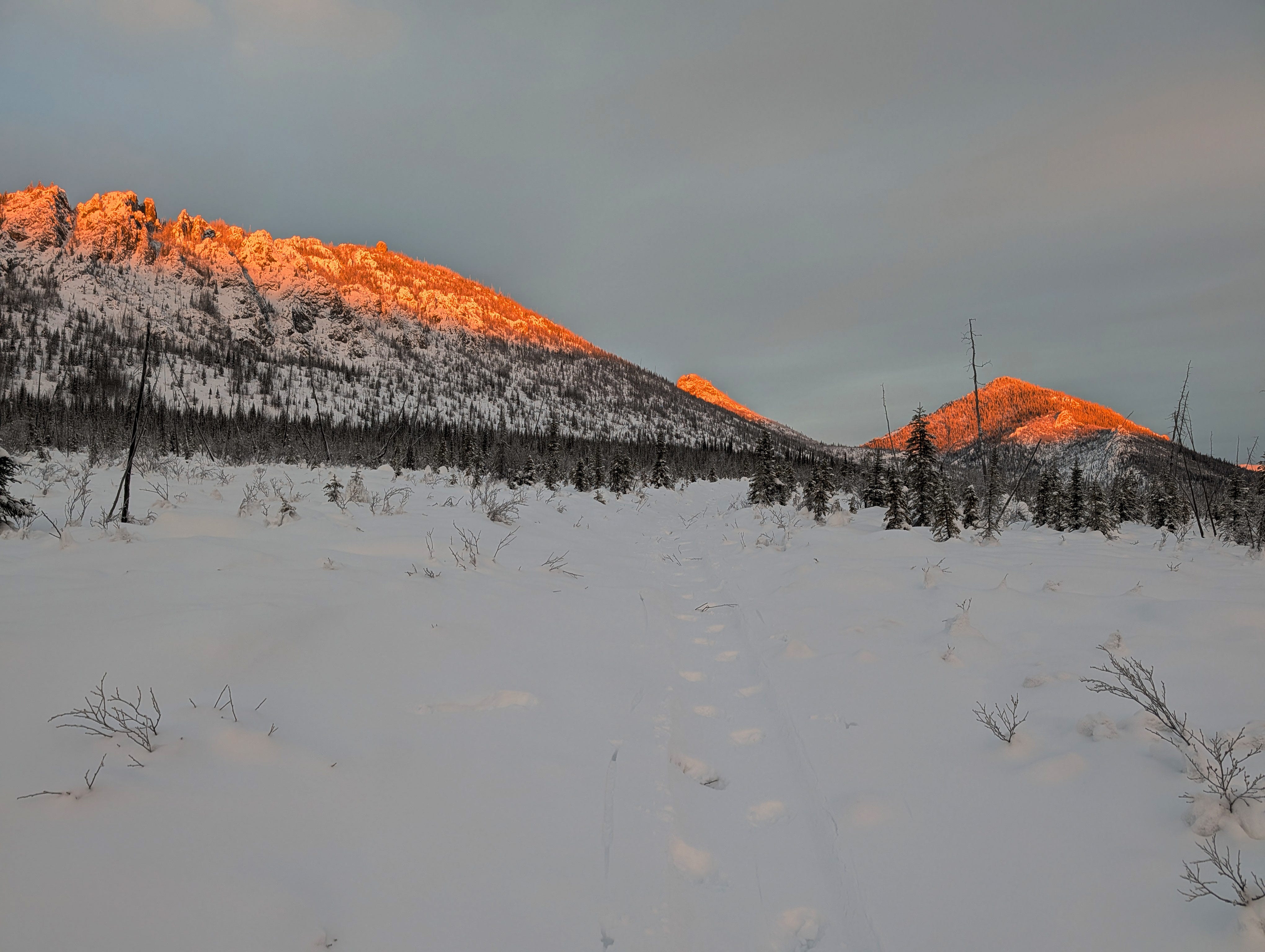
The temperature had dropped to 40 below by the time we set out from Borealis cabin just before dawn, and would stay that way for most of the next two days. The rise toward Fossil Creek was still 35 degrees below zero with a stiff breeze, which feels like being raked with tiny but sharp needles on exposed skin. Beat criticized me for not better protecting my face during the trip, but I don’t operate well with headgear that obstructs my breathing. I’d recently inherited an oversized fleece balaclava from Betsy, and combining that with a fuzzy buff to pull over my mouth lets me breathe the warm, moist air circulating my face beneath the soft hood. Betsy’s balaclava is particularly amazing because it sheds most of the frost created by my frozen breath and stays soft even after hours at 40 below — my other balaclavas usually become ice helmets. I smear my face with Dermatone to protect my skin, but I may have a touch of frostnip on my cheeks. I’m suspicious that these red patches are frostnip, though, because I’m also having an eczema outbreak right now, probably brought on by the stress of trying to survive four days in the deep sub-Arctic cold.
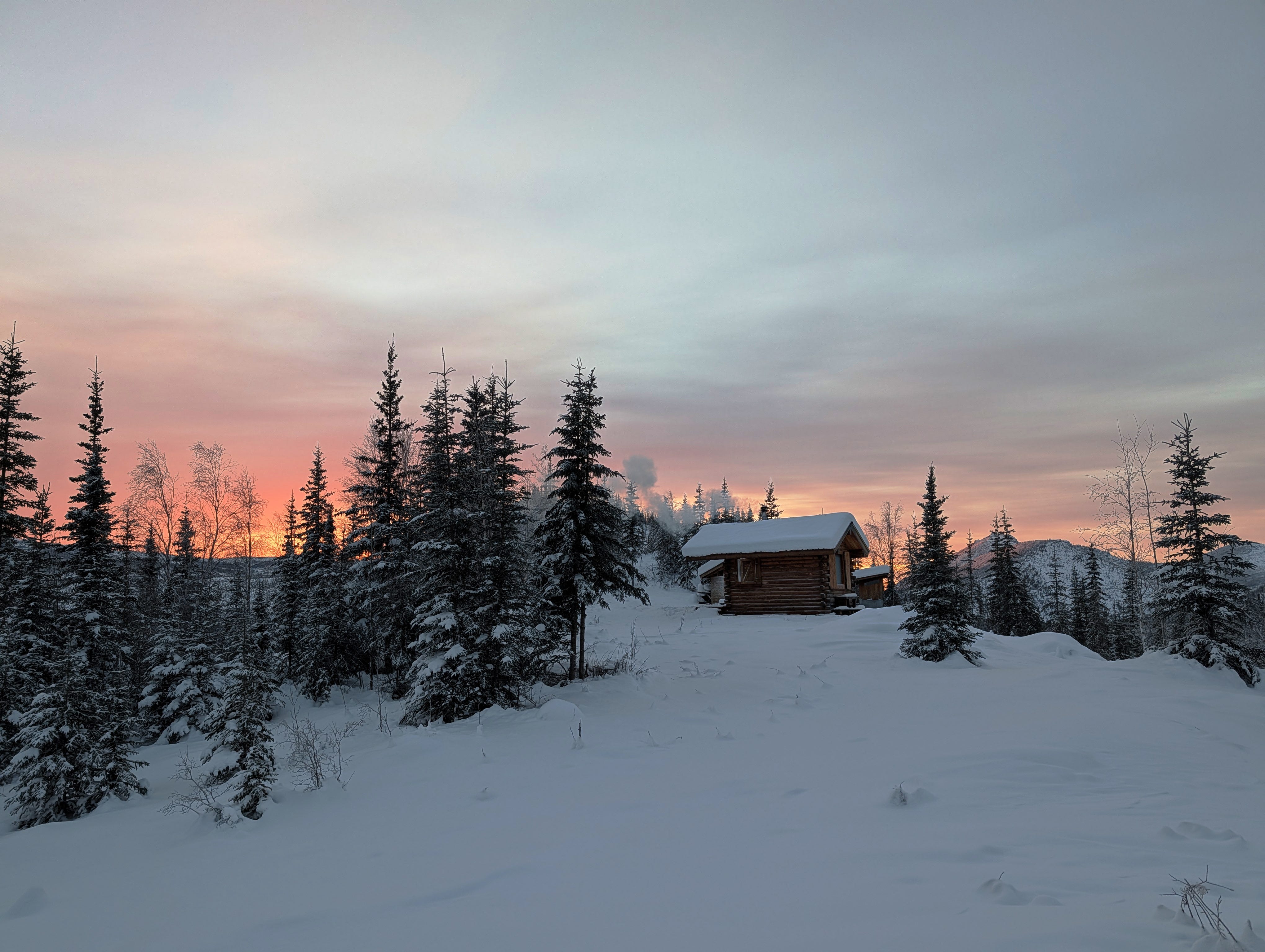
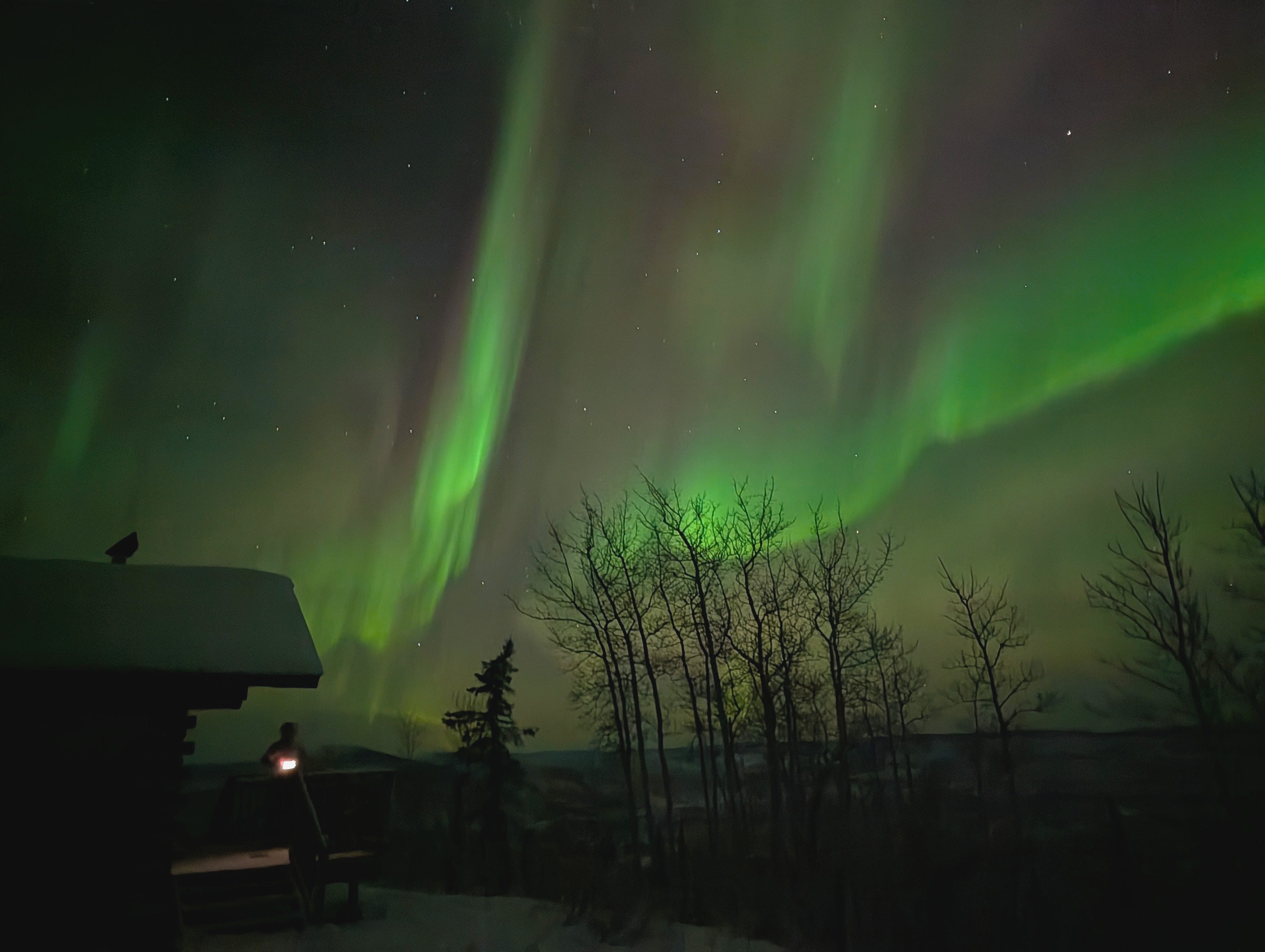
It was a rough day with my tender ribs and trying to keep my ragged body watered and fed as I marched through the ever-skulking phantom of 40 below. It took me nearly five hours to slog out the 10 miles to Caribou Bluff cabin, but this perch on a minor ridge above Fossil Creek is one of my favorite spots in the world. And we were rewarded with a clear night and gorgeous Northern Lights.
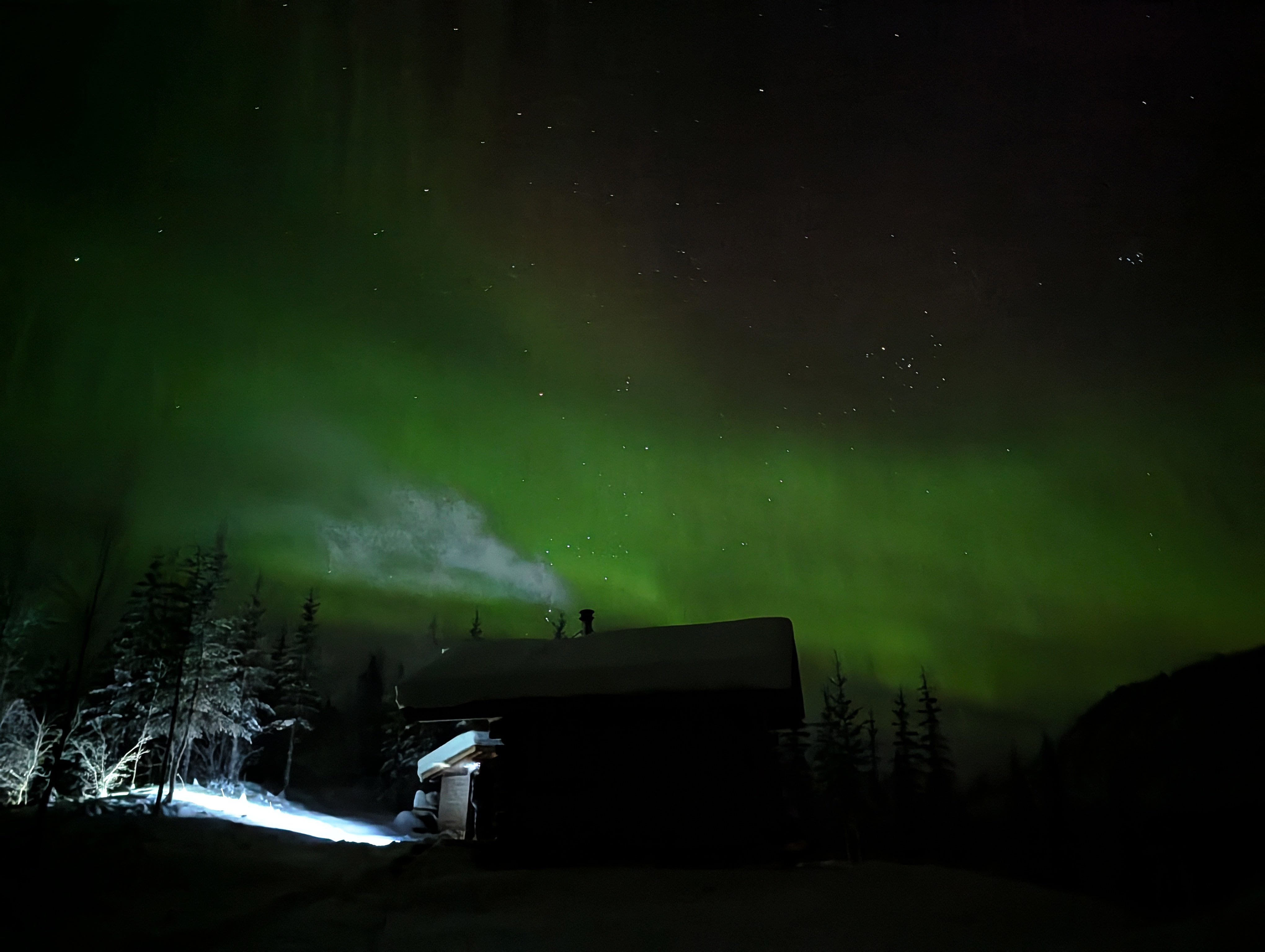
Nights in the cabins at 40 below require quite a bit of effort as well. Beat takes on the bulk of the work, bless him, as he chops piles of wood from the logs helpfully left by past visitors with snowmobiles and chainsaws. At these temperatures, he can pick the largest, most unwieldy logs because dead wood shatters like glass at 40 below. Then he proceeds to get up every two hours, all night long, to restock the stove. If we let the stove go out, it’s quickly 40 below inside the cabin again. We have the sleeping gear to manage this, but we won’t choose it if we don’t have to. I’m not a good sleeper, so Beat lets me sleep when I can. Bless him.
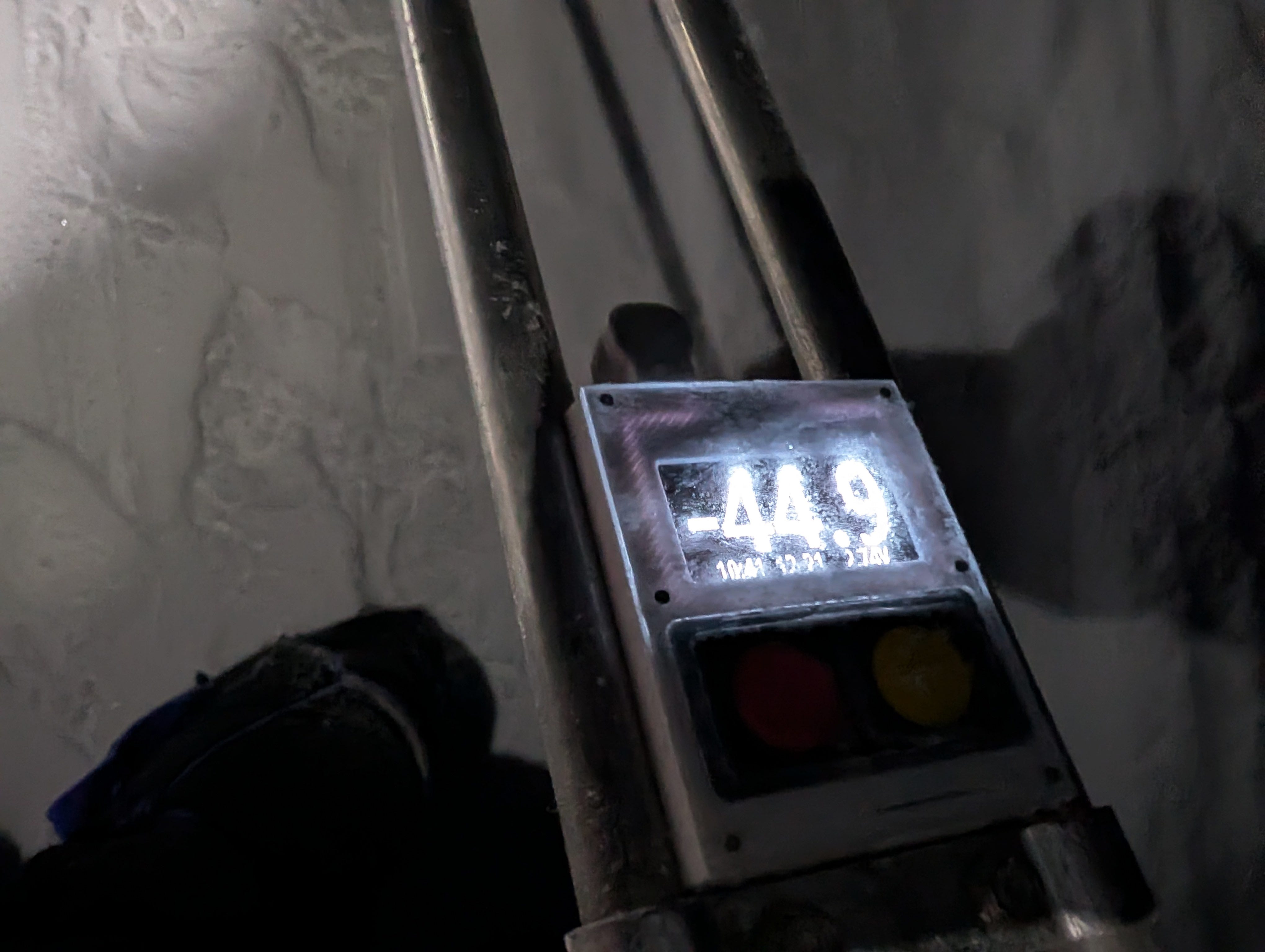
The next morning — the Winter Solstice — was very cold. The temperature would hit a record 78 degrees in Boulder the following day, which our friend pointed out was 122 degrees warmer than where we were. If you can imagine the difference between 122 and 0 degrees Fahrenheit, it’s the same; the difference is only a matter of individual perception. It was cold, but Solstice was also an incredibly beautiful day, and thankfully drama-free, so it’s a story best told in photos.
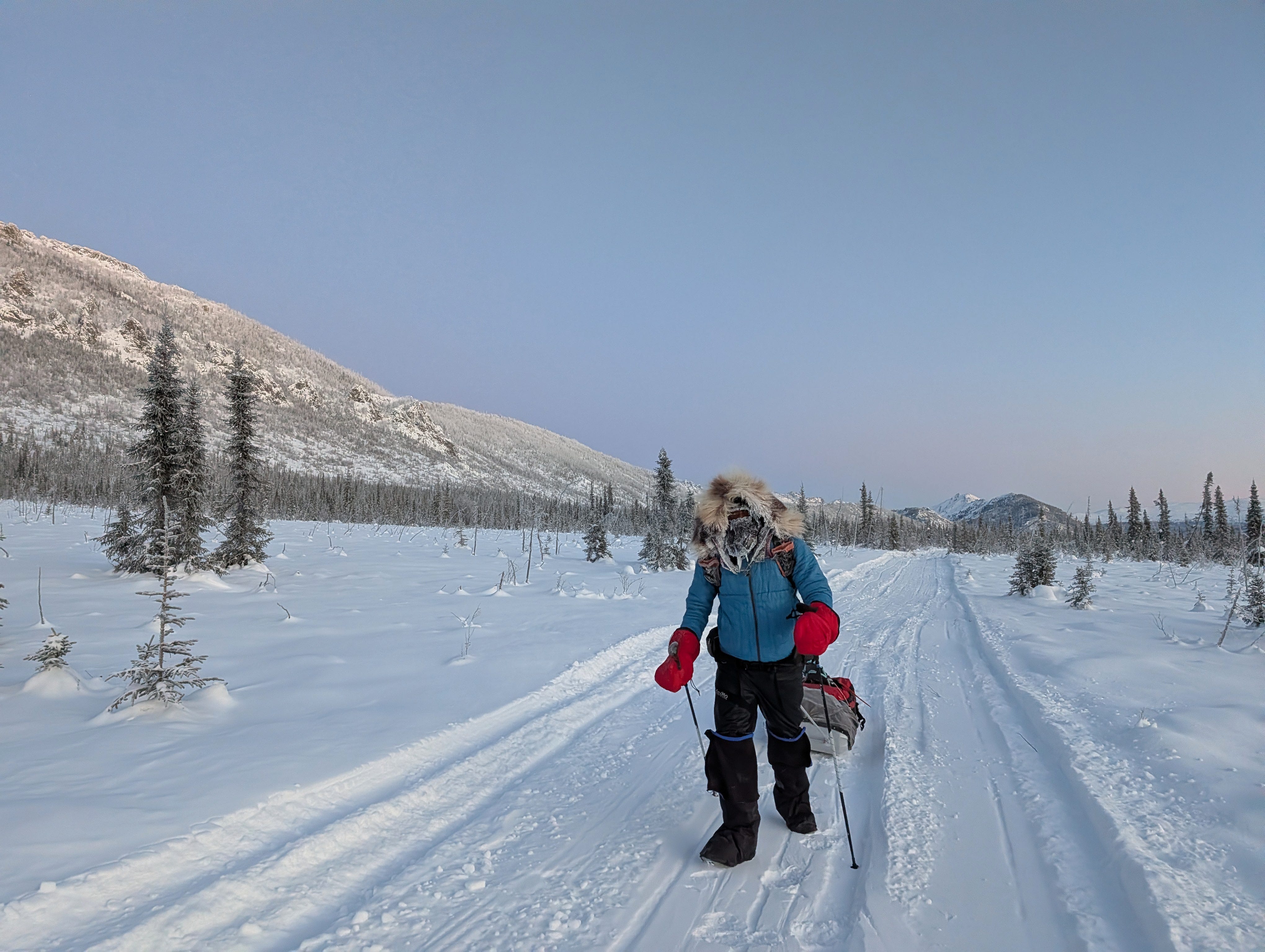
Magic light lingers for nearly an hour before sunrise.
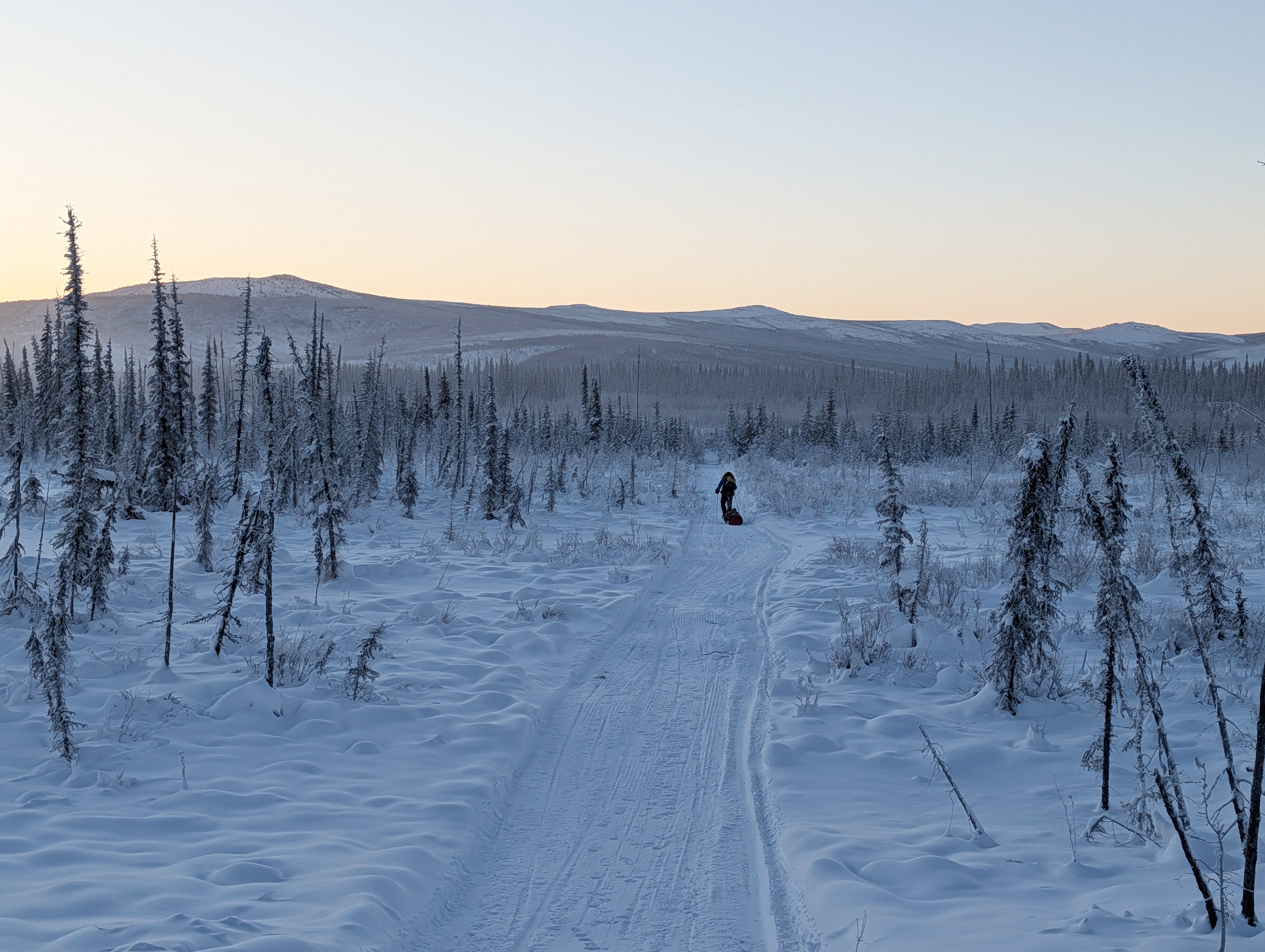
Dropping toward the ice fog hovering over Beaver Creek.
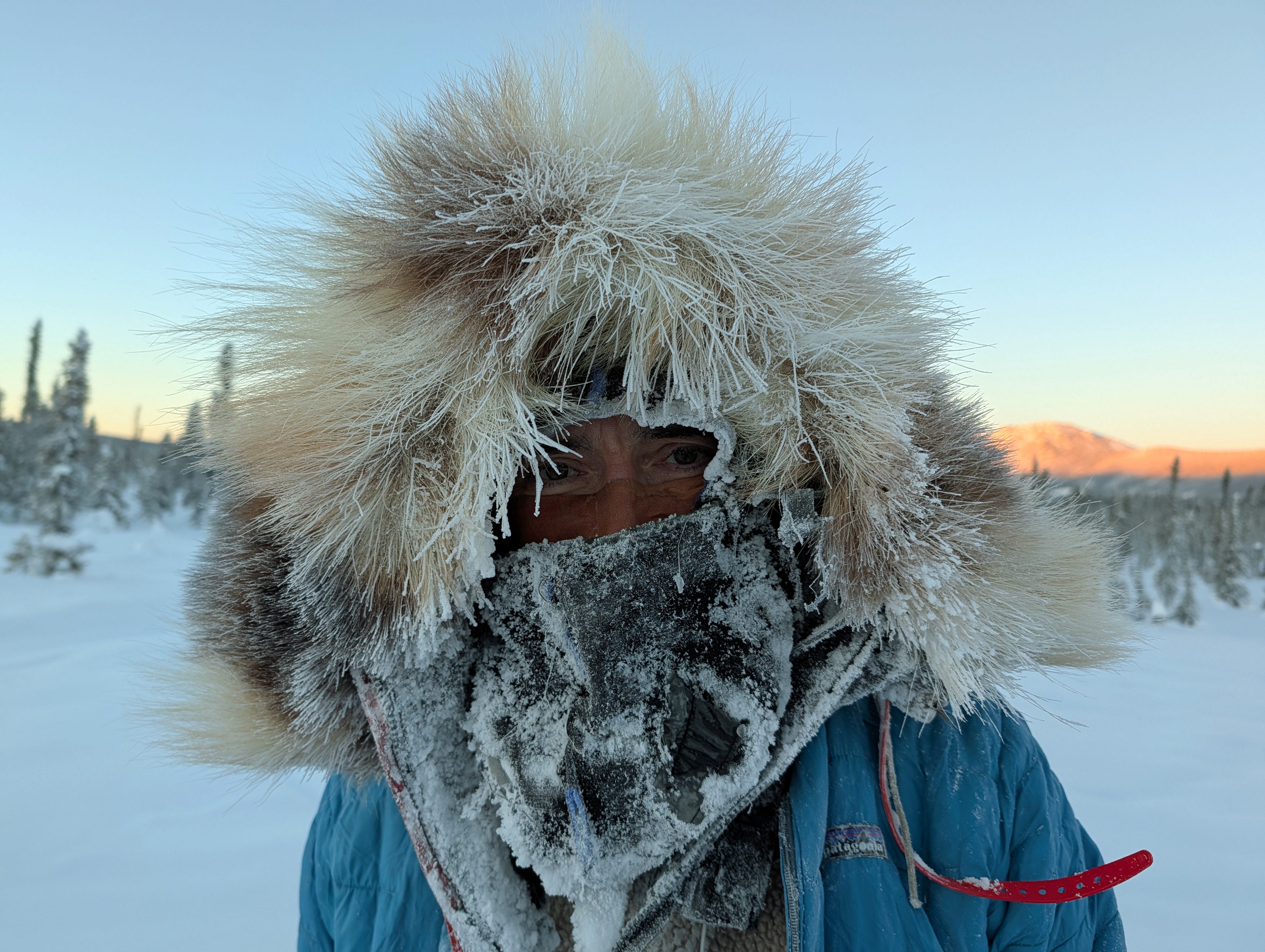
Beat as an Arctic explorer.
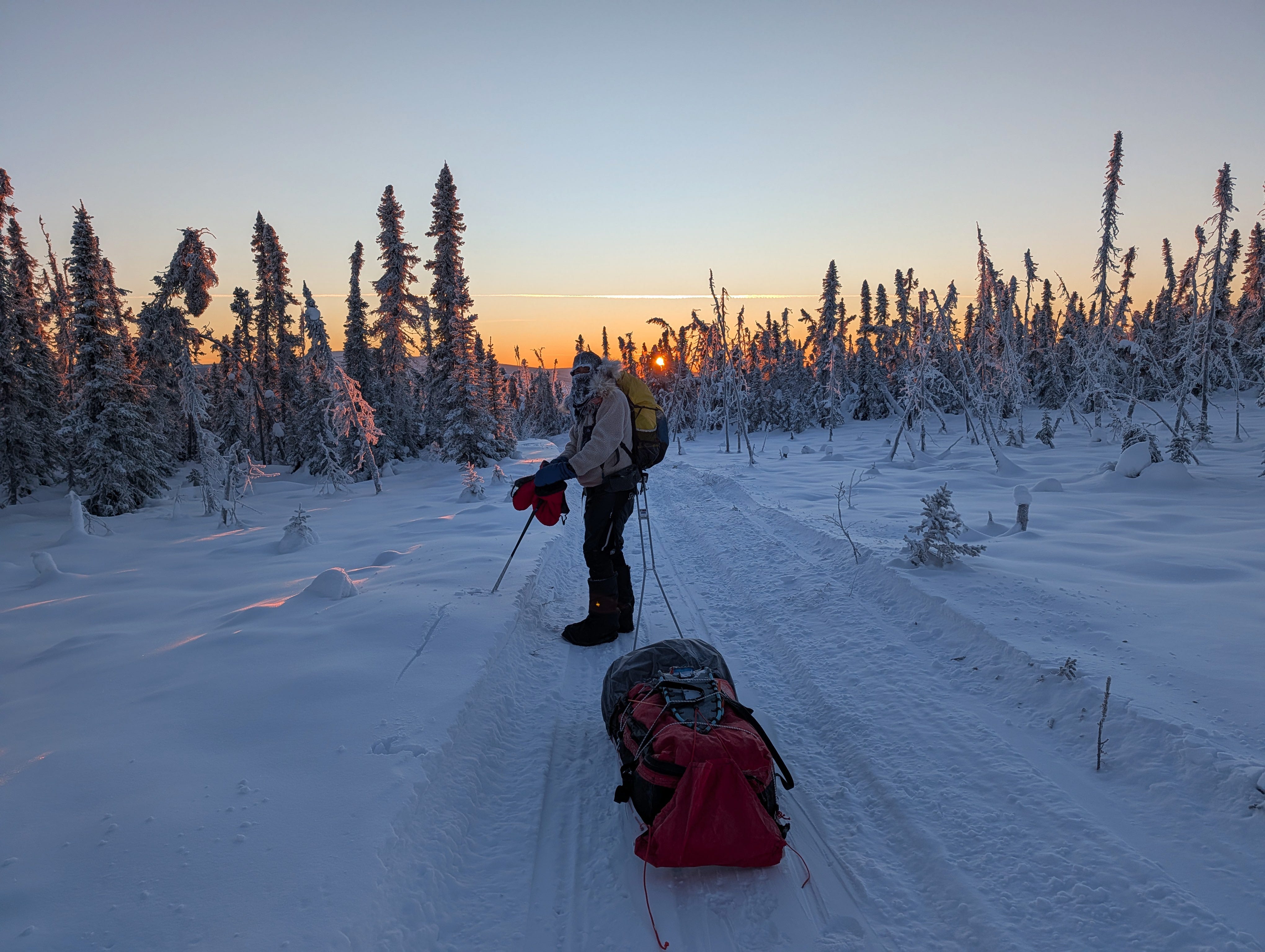
What counts as high noon on Winter Solstice in the White Mountains.
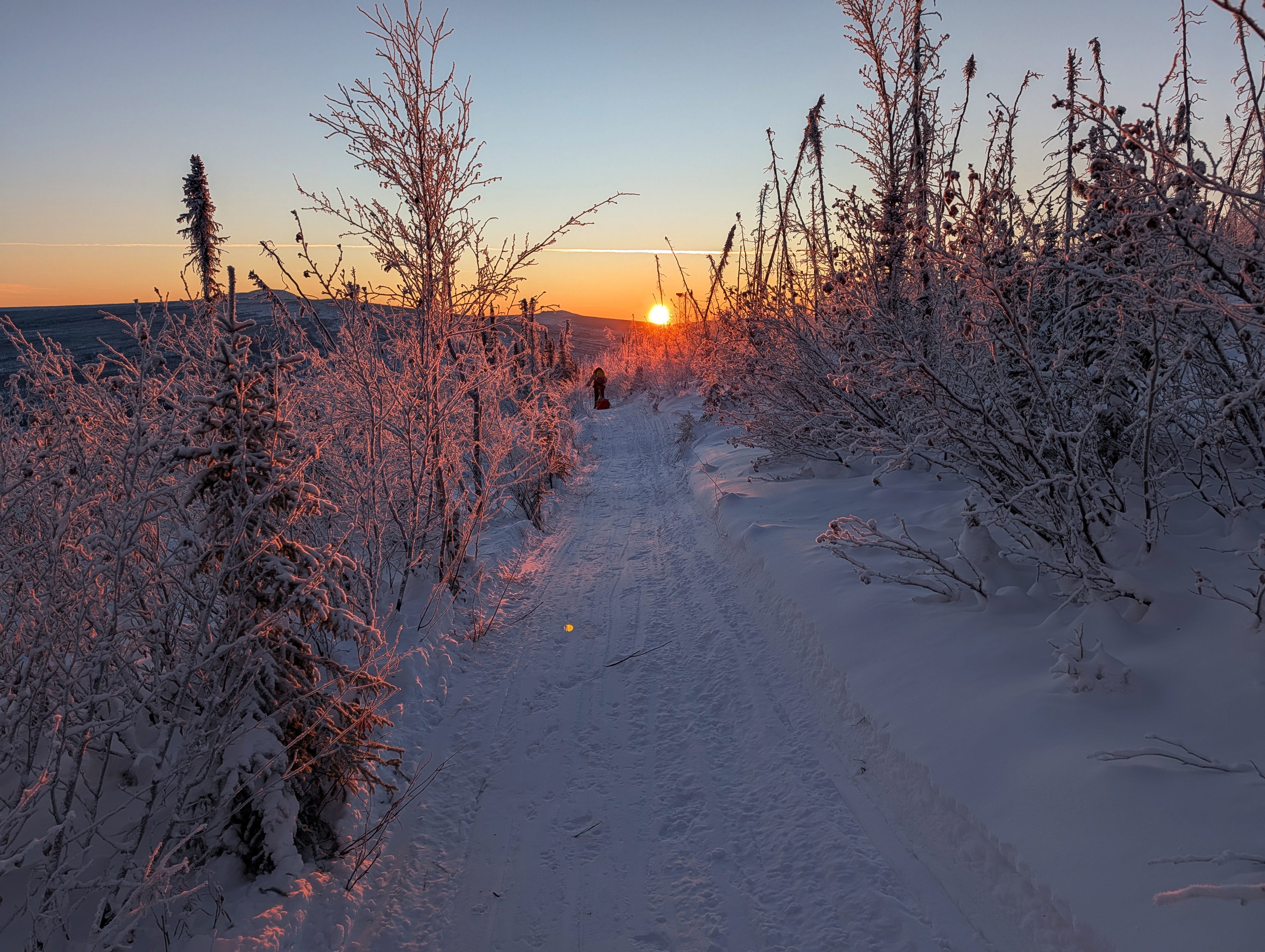
The most magical of magic light.
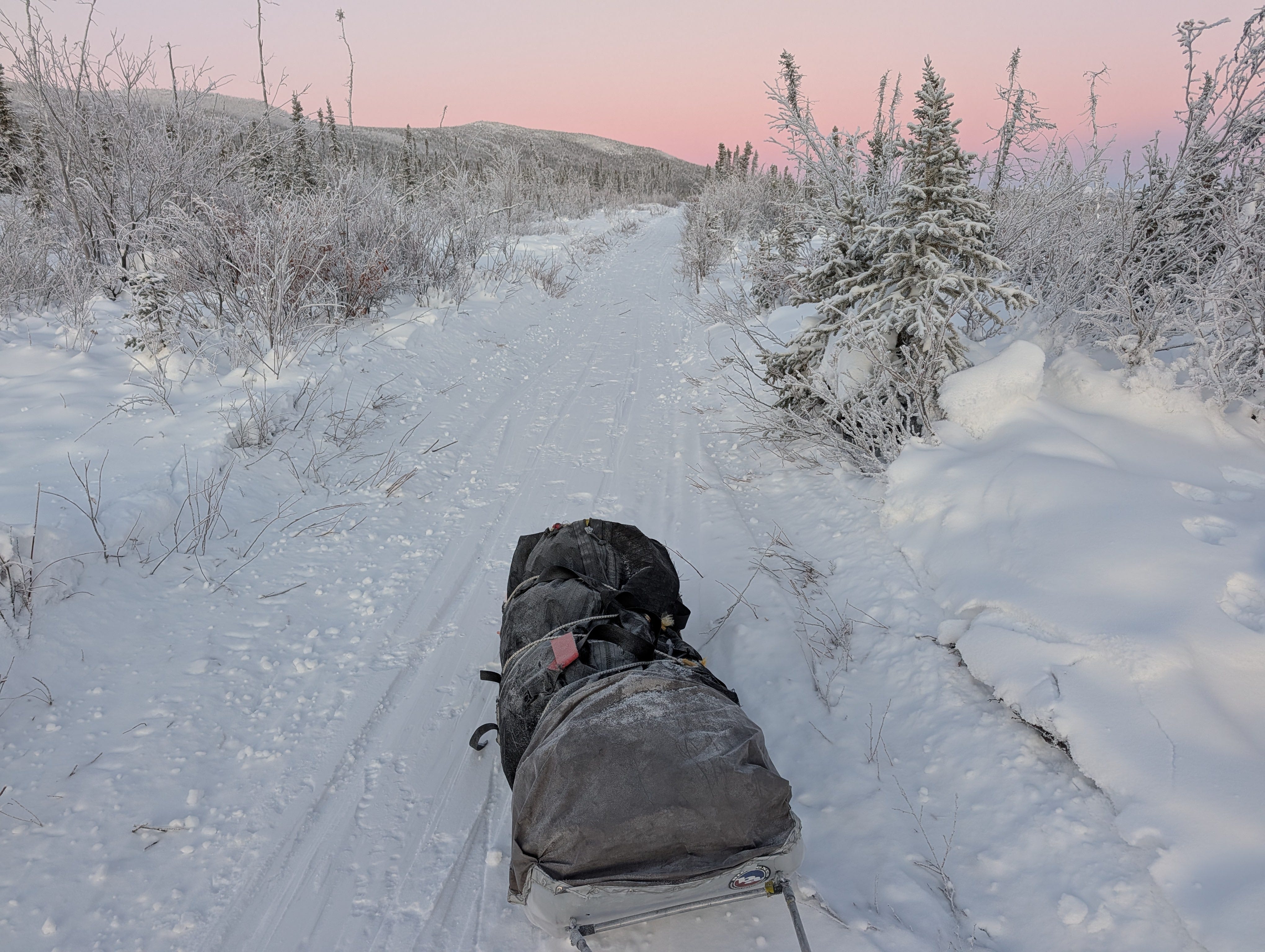
The frosty alpenglow that lingers long after sunset.
After another 19-mile, nearly 10-hour day, we climbed up to Eleazar’s cabin. The inversion was again sinking into the valleys, and it was again 15 below.
“It feels so warm,” I marveled. We agreed to let the stove go out overnight because this was practically barefoot weather. But turns out perception is not reality, fingers still freeze rapidly at 15 below, and Beat eventually decided to keep stocking the stove.
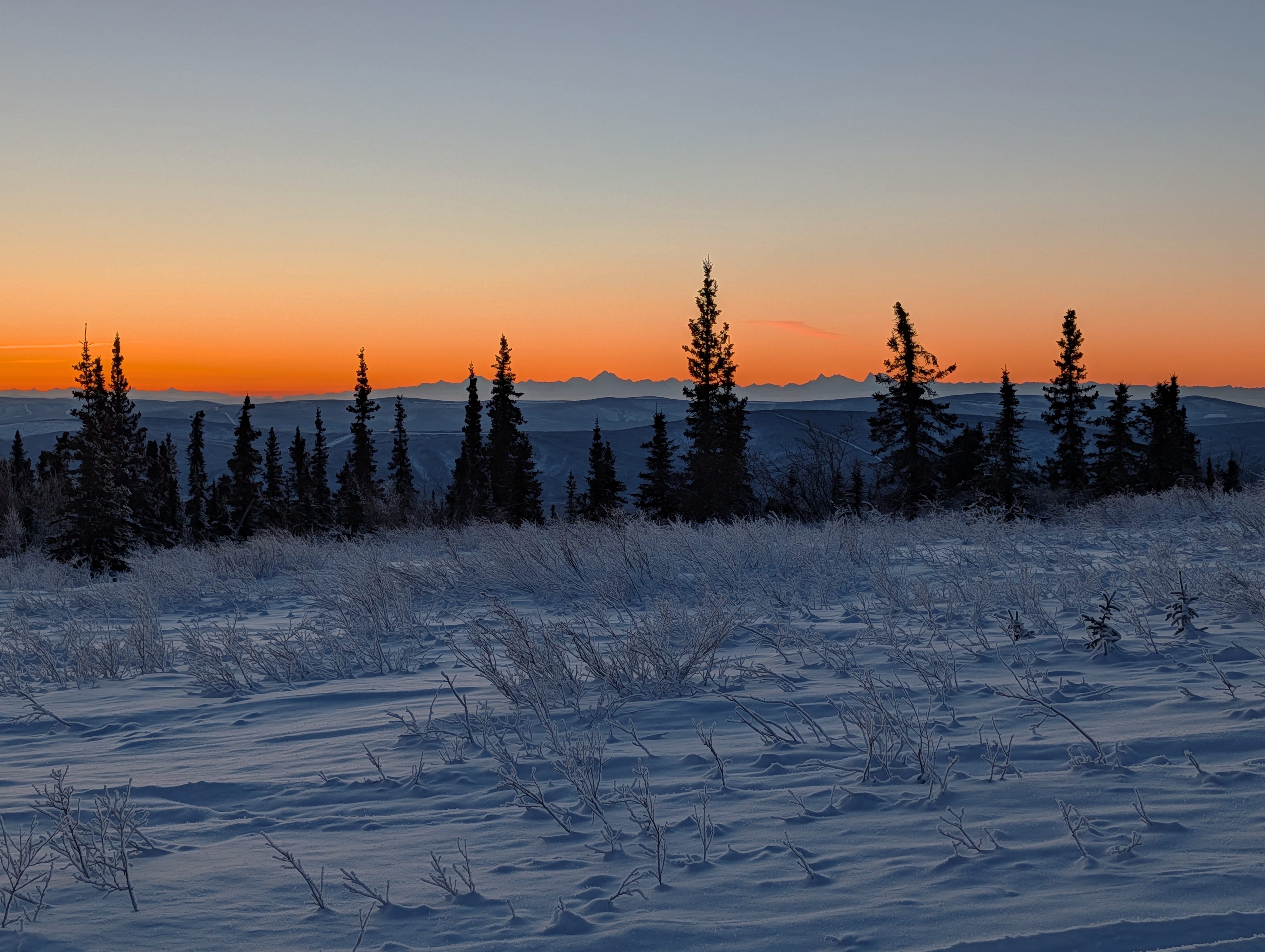
I was about four miles into day four, dragging across the lowest and coldest point on Wickersham Creek — 42 below — when my sled harness snapped and I had a minor calamity. Old-time Alaska explorer and mountaineer Hudson Stuck famously said, “Everything is okay when it's 50-below as long as everything is okay.” And yes, 42 below is not 50 below. I’ve experienced 50 below — only once — and even then, there’s an incredible shift in reality in these small increments. So many things freeze, break, and fail that you’d never expect.
When the simplest of things fail, you realize what it means for everything to not be okay. Mistakes are not just a luxury at 40 below; they’re not an option. Consequences can be swift and merciless. I made a mistake in not checking my gear before the trip. And I made a second mistake in not bundling up in a down parka when I stopped, even though it was only for a few minutes. I was lucky that my body came back online without too much damage, but I’m reminded that luck is just that. It’s humbling to realize how fragile and helpless a human body truly is in this big, unsparing world.
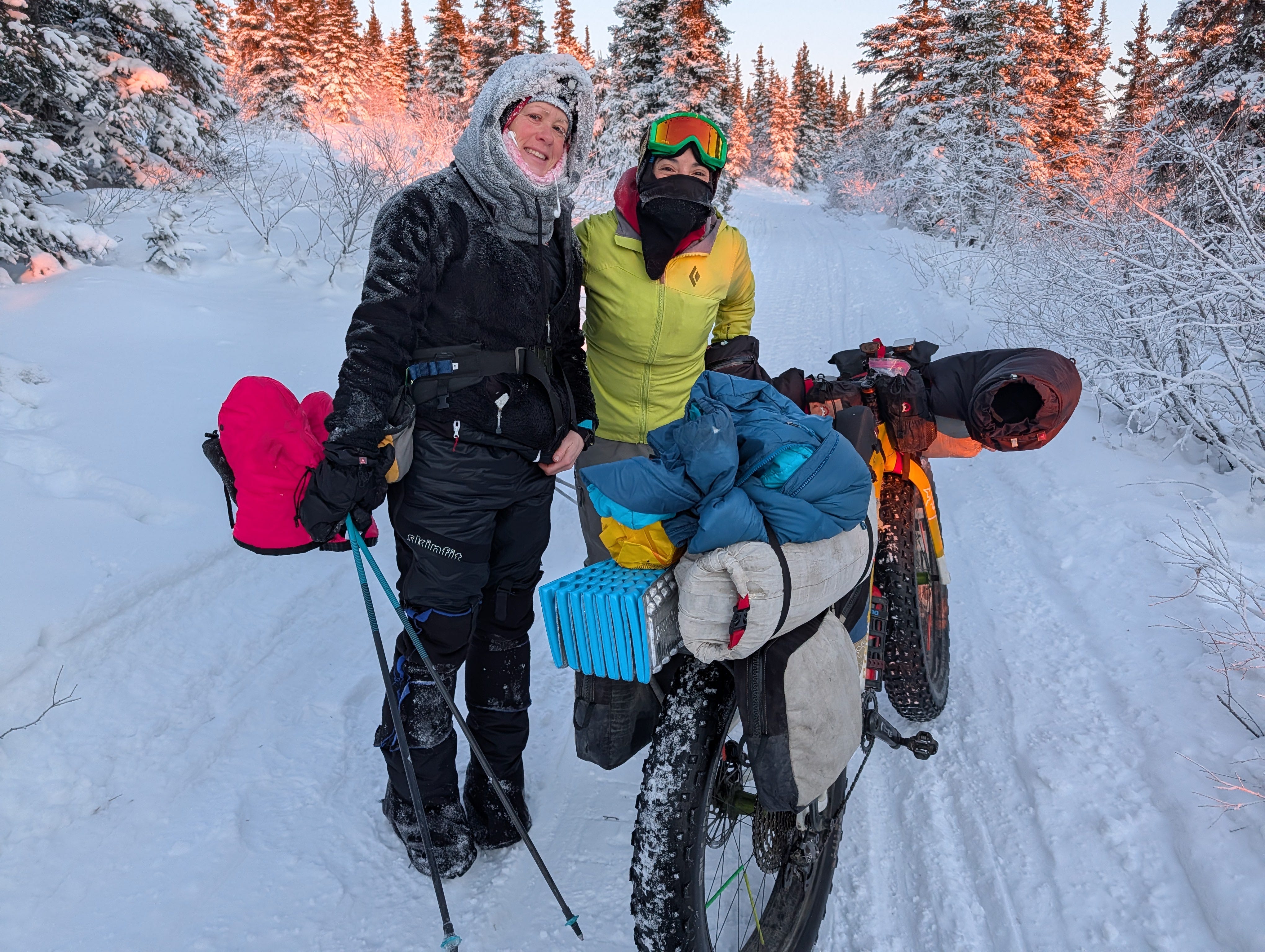
I was a half mile from the trailhead, back in the high, balmy climes of the ridge where it was 15 below, when I encountered the first humans we’d seen on the trail in four days. My friend Christina had come up from Anchorage to take a friend on her first winter bikepacking trip. We warned of the 40 below temperatures that awaited, and ultimately, they’d have their own misadventures with the danger cold, but that would be their story to tell.
Beat and I have another three-night trip planned starting Christmas Day. With several inches of new snow forecast on Christmas Eve, and similarly cold temperatures for the weekend, this trip could prove to be similarly taxing or much worse. But, weirdly, I feel so eager to get back out there. And there’s no way to explain why, just as there’s no way to convey what it’s like to spend a day in the surreal moonscape of 40 below. You just have to try it.
From my nearly 20 years lived in Fairbanks, I can relate to how -15F would feel absolutely balmy after 40 below. Love the first photo of Beat silhouetted in the beam of light and the aurora above.
Wow. What an adventure. To venture where so few have been and to witness such pristine scenery and extreme temps. Very inspiring